

The Editor’s Note
A warm welcome back to Oxford! We hope everyone had a restful holiday season and is settling back into university life smoothly. If in this whirlwind week you’ve found yourself dashing around the cold streets of Oxford, running between lessons or finally catching up with long-missed friends, and haven’t been able to keep up with the news – don’t worry, we’ve got you covered with some of this week’s global headlines.
President Donald Trump continues to make regular appearances in the news, this week with his newly-designed Gaza Board of Peace. 19 countries gathered together in Davos, Switzerland, as signatories of his new team which aims to oversee phase two of the Gaza peace plan that includes full demilitarisation and reconstruction within Gaza.
Over in Uganda, Yoweri Museveni won yet another election, beginning his seventh presidential term and extending his four decade rule by another five years. However, the elections have been marred by repression and intimidation, including a nationwide blackout.
Down under in Australia, the Liberal/National coalition has split up once again. This comes following disagreements around gun control measures and hate speech laws that were brought up after the Bondi Beach antisemitic terror attack. With the centre-right of Australian politics now divided, their future looks uncertain.
Signatories Gather for Trump’s Gaza Board of Peace
Laura Beard
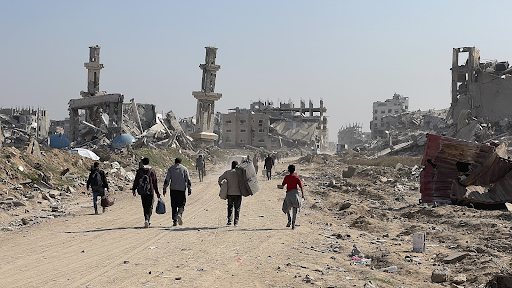

On 22 January 2026, at the World Economic Forum in Davos, Switzerland, representatives from 19 countries gathered as signatories of Donald Trump’s newly proposed Board of Peace. During his first announcement on 15 January via a Truth Social post, Trump described the organisation as “the Greatest and Most Prestigious Board ever assembled at any time, any place”. Intended to oversee phase two of the Gaza peace plan, the Board will begin a process of full demilitarisation and reconstruction within Gaza.
The US-orchestrated peace plan first came into force in October 2025. It included a ceasefire agreement which confirmed an end to Israel’s war on Gaza, the exchange of hostages and prisoners, partial Israeli withdrawal, and greater aid. However, there have been concerns that the plan has been violated; 450 Palestinians have been killed by Israeli strikes, including over 100 children since October 2025. This marks a total of 71,439 casualties in Gaza between 7 October 2023 and 14 January 2025, according to the Gaza Ministry of Health. Many organisations, including the UN, Amnesty International and Oxfam International, have labelled Israel’s actions genocidal. For more information, see Elana Roberts’ article here.
The Board of Peace’s plans for the next 100 days were outlined at Davos by Trump’s son-in-law, Jared Kushner. These include increased aid, and the rebuilding of key infrastructure such as hospitals, and water and sewage systems. Additionally, Ali Sha’ath (leader of the National Committee for the Administration of Gaza, which will be overseen by Trump’s Gaza Executive Board) has announced the imminent re-opening of the Rafah crossing between Egypt and Gaza. Before its closure by Israel in May 2024, the crossing provided a crucial link for humanitarian aid, allowing some Palestinians to flee Gaza.
An initial proposal for a Board of Peace was made in September and received widespread support, including a UN Security Council mandate for temporary deployment to oversee the ceasefire within Gaza. However, many, including Sky News, have highlighted that Trump’s current vision for the organisation is far more “ambitious”, extending well beyond the UN mandate.
Trump has appointed himself chairman, a position he intends to hold for life which will grant him extensive executive power, including veto authority and the ability to eject other nations. The Board will also be made up of a number of heads of government, with 60 nations invited to join so far. 35 have agreed. These include NATO members such as Türkiye and Hungary, alongside Middle Eastern nations, specifically Israel, Saudi Arabia, UAE, Bahrain, Jordan, and Qatar.
Controversially, China, Belarus, and Russia have also been invited to join. While Trump initially claimed that President Vladimir Putin had accepted the position, Putin corrected this, revealing that the invite is still under consideration. In fact, none of the other UN Security Council permanent members (UK, France, Russia, and China) have accepted their invitations. France, as well as Norway, Sweden, and Italy have all declined, and British Foreign Secretary Yvette Cooper commented that the UK would decline “for the moment”, citing concerns over the legal treaty.
A number of well-known figures have also been appointed to the executive board. These include US Secretary of State Marco Rubio, Jared Kushner, Steve Witkoff (US Special Envoy to the Middle East), Sir Tony Blair, and Ajay Banga (President of the World Bank). Blair’s appointment has provoked some controversy within Britain; senior ministers have expressed concerns over Blair’s potential collaboration with Putin, while in September 2025 Health Secretary Wes Streeting told the BBC that Blair’s involvement would “raise some eyebrows” given his record in Iraq: as Prime Minister, Blair entered the Iraq War in 2003.
Alongside qualms surrounding membership, according to Reuters, there are concerns that the Board of Peace will undermine the United Nations. Trump has expressed his intentions to broaden the remit of the Board beyond Gaza, resolving other global conflicts. This was reflected in the organisation’s charter, proposed by the White House, which fails to mention Gaza. On the other hand, Trump has challenged the idea that he will overlook the UN , describing the UN’s “tremendous potential” and suggesting that a “combination” of the Board of Peace and UN could be “something very, very unique for this world”. However, his previous criticisms of the UN (that it “hasn’t been very helpful”), as well as his comment that the Board “might” replace the UN, suggest that experts’ concerns may hold weight.
Yoweri Museveni Takes The Title In Yet Another Presidential Election
Nancy Gittus
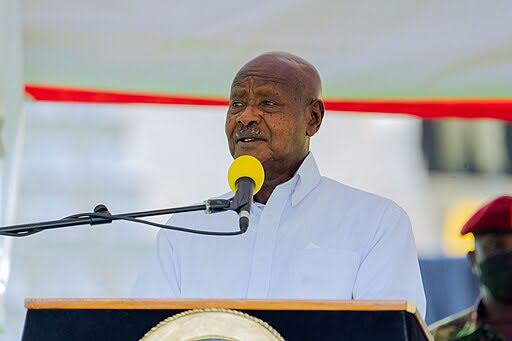

Yoweri Museveni claimed yet another victory in Uganda’s presidential election on Saturday 17 January. He has now embarked on his seventh presidential term, extending his four decade rule by another five years. He secured 72% of the vote in a landslide victory over his closest opponent, former pop-star Bobi Wine, who achieved just 25%.
However, these elections have been marred by “widespread repression and intimidation against the political opposition, human rights defenders, journalists and those with dissenting views,” according to the UN Human Rights Office. Bobi Wine, whose real name is Robert Kyagulanyi, declared the results “fake” and accused the government of undertaking “massive ballot stuffing”.
Although the African Union has declared that it can find “no evidence of ballot stuffing”, there can be no dispute as to the nationwide internet blackout imposed by the Ugandan Communications Commission on Tuesday 13 January, just two days before the election. The Commission claimed the blackout was necessary to limit “misinformation, disinformation, electoral fraud and related risks”.
This decision has been widely criticised by the international community. Tigere Chagutah, the East and Southern Africa regional director at Amnesty International, condemned the move. She attacked it as a “brazen attack on the right to freedom of expression”. Chagutah emphasised that “blanket shutdowns disrupt people’s mobility, livelihoods and their ability to access vital information. They are inherently disproportionate under international human rights law and must never be imposed”.
There was also a major violent incident mere hours after polls closed, placing further concern over the legitimacy of the election. Authorities have confirmed that seven people were killed in Central Uganda. Police spokesperson Lydia Tumushabe stated that officers fired in self-defence at opposition “goons” organised by local MP Muwanga Kivumbi. Kivumbi disputes this account, and instead argues that 10 members of his campaigning team had been killed by security forces inside his own home on Thursday 15 January.
Since election night, Bobi Wine has also been the victim of a raid on his home. On 17 January, the opposition leader posted on X: “Last night was very difficult at our home in Magere. The military and police raided us. They switched off power and cut off some of our CCTV cameras. There were helicopters hovering over”. His assistant, Dan Magic, has confirmed that Wine’s current whereabouts are unknown.
Despite the political chicanery, it is nevertheless true that Uganda’s long-time President remains widely popular and well-supported amongst voters. Museveni deployed his usual campaign messages of “protecting the gains”. His presidency has long been associated with early policies of curbing post-independence chaos, and promoting rapid economic growth.
He continues to build off these policies, claiming his new oil export project will make Uganda’s GDP surge from USD $50 billion (2023) to USD $500 billion by 2040. “By June 2025, our economy will grow by 7.3 percent without oil, a rate which is rare to be achieved, and with oil the rate of growth will go into double digits; that is more than 10 percent,” he announced in February of last year. These crude oil exports are projected to begin in October, via a 1443 km pipeline to Tanga in Tanzania.
Many feel hopeful for the prosperous future Museveni promises. 37-year-old teacher Isaac Kamba told the AFP news agency, “I’m really very happy to see he’s won,” and that, “the victory comes because of his hard work, dedication and commitment to the people of Uganda.”
However, there is still one question mark hanging over the next presidency: will it really be that of Museveni’s? Last year, the President was forced to cancel several campaign events due to “state duties”, engendering fears over his possible decline in health. In January of this year, sources close to the President reported to the BBC that Museveni is increasinglydelegating power to his next of kin. His daughter, Natasha Karugire, manages Museveni’s day to day schedule; international events and diplomatic relations are mostly overseen by his half brother, Salim Saleh; economic policy is decided by his son-in-law, Odrek Rwagbwogo; and, most significantly, Musveni’s son Muhoozi Kainerugaba now holds the position of Chief of Defence Forces, an integral role in the running of the country. Although Museveni has denied this, it does suggest that Kainerugaba is possibly being groomed to take over from his father as the next head of state.
Australia’s Liberal/National Coalition Splits. Again.
Noah Allerton
.jpg)
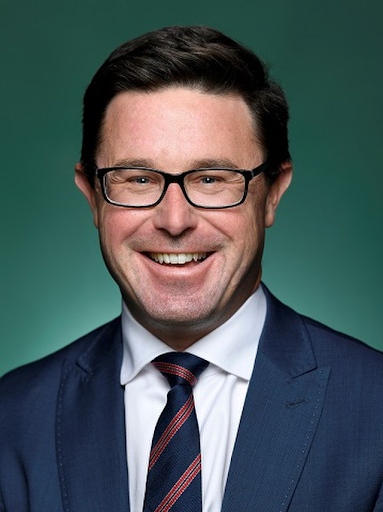
In almost every election since the Second World War, Australia’s current major opposition parties, the Liberal Party and the National Party, have fought together under a coalition agreement. Now, for the second time since the Australian election in May last year, the coalition agreement between the two parties has been ended by the leader of the National Party, David Littleproud.
The Liberal Party and National Party operate in a coalition in order to provide different messages to different communities, whilst not splitting votes unnecessarily. The Liberal Party historically performed better in more urban areas, with the Nationals performing almost exclusively well in rural areas. The coalition agreement ensures that each party can tailor their messaging as such, and the two parties do not run against each other to detriment of both parties. They occupy a similar space in the centre-right of Australian politics.
In the May 2025 election, the Liberal/National coalition suffered its worst defeat on record, winning just 43 seats in the 150 seat Australian House of Representatives. Incumbent Labor Prime Minister Anthony Albanese increased his party’s majority and won in what was described by former ABC polling analyst Antony Green as a landslide, winning the most seats for Labor in their history. This loss was widely attributed to the weakness of Liberal Party leader Peter Dutton, who was compared to Donald Trump at a time of uncertainty around the US President and his tariff policy. In the election, Dutton lost his own seat of Dickson that he had held since 2001, and resigned as Liberal Party leader on election night.

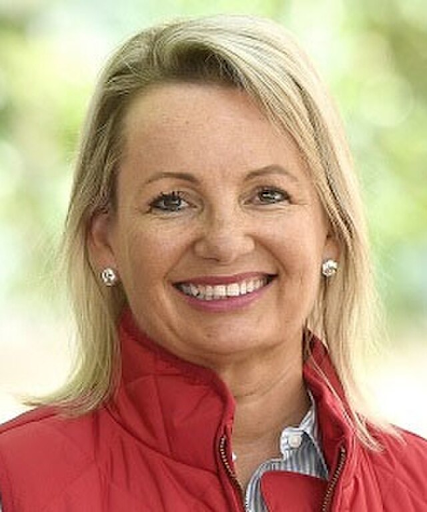
Sussan Ley, former Deputy Leader of the Liberal Party under Dutton, as well as a cabinet member during all Liberal governments from 2013 until 2022 under Prime Ministers Tony Abbott, Malcolm Turnbull and Scott Morrison, was elected to replace Dutton as leader just 10 days after the party was defeated. Ley is the first woman to lead the Liberal Party in its history, but won by just four votes over rival Angus Taylor, former shadow Treasurer under Dutton. Ley is considered to be a member of the moderate or centre-right faction of the Liberal Party, whereas her rival Taylor is viewed as a member of the national right faction, the furthest right faction of the party.
The election was a far greater defeat for the Liberal Party than the National Party; when considered as separate parties, the latter lost one seat compared to the 14 lost by the former. Just one week after Ley was elected leader, National Party leader David Littleproud announced that his party would be leaving the coalition agreement. Littleproud acknowledged that the Liberal Party was on a “journey of rediscovery” and was leaving the coalition so that the National Party would not “[impose] on their will”.
Policy disagreement was also at play, and after the election Ley made clear that the Liberal Party would undergo a full policy review. This led to unclear positions on policy that the Liberal Party had advocated for going into the 2025 election, including on nuclear power and net-zero. The National Party had strongly supported nuclear power, and Littleproud himself cited this disagreement on policy as part of the reason for his party leaving the coalition.
Despite this, just eight days later, the coalition was back on, with Ley and Littleproud announcing a new coalition agreement. The National Party had secured internal Liberal support in four key policy areas that it desired, including on nuclear energy and on regional investment. A joint ministry was formed, however, during 2025, the coalition faced more problems. Former Deputy Prime Minister and National Party leader Barnaby Joyce left the National Party in November last year, amid speculation that he was going to join Pauline Hanson’s One Nation, a right-wing populist party. One Nation’s polling in 2025 had steadily increased, and by the time Joyce left the National Party, One Nation were at 18 percent in some polls, an increase from six percent in the election six months before. Joyce joined One Nation two weeks after leaving the National Party.
Just a week later, the horrific events at Bondi Beach unfolded, with 15 people killed in an anti-semitic terror attack. The shock of the events, and the revelation that one of the perpetrators legally owned a total of six firearms, led to conversation about whether Australia’s already strict gun laws needed review. However, the National Party, given its support from those in rural areas and their greater likelihood of owning firearms, was more unsure about new gun control measures.
On 20 January, the Australian Parliament passed new gun control measures and hate speech laws, voted for by the Labour Party and the Liberal Party. The National Party, however, abstained. Following this abstention, three members of the National frontbench resigned, citing that it was simply out of respect for the Westminster system, and that Ley did not have to accept the resignations. It had been reported that Littleproud had warned Ley that if she accepted the resignations, the rest of the National Party frontbench would follow. Ley, despite these warnings, accepted the resignations, and the rest of the National Party then followed.
Subsequently, Littleproud officially announced that the coalition agreement was terminated, on a day of national mourning for those who had been murdered in the attack on Bondi Beach that had inadvertently led to this rupture. He claimed that the coalition was “untenable”, and the Guardian Australia reported that Sussan Ley’s leadership of the Liberal Party may be similarly indefensible (repetition). “She will have to fight now”, claimed one Liberal MP, spelling trouble for her future as party leader.
The Liberals and the Nationals now find themselves apart for the second time in just eight months. The centre-right of Australian politics is divided, and One Nation are continuing to increase their polling; one opinion poll conducted before the coalition split found One Nation ahead of the coalition in terms of vote share for the first time ever, and polling conducted by four different companies has now found the One Nation vote share to be above 20 percent.
The future of Australia’s centre-right parties looks extremely uncertain, however it is clear that the parties will not be reunifying after just one week this time, with Littleproud arguing that the parties need “time apart”. It is important to note that now, despite the Liberal disaster in 2025, both themselves and the Labor Party hold more rural seats than the National Party. The purpose of the National Party when not married to the Liberal Party is a question Littleproud will have to voice a strong answer to, whilst Ley has to maintain her leadership. Meanwhile, both parties will try to fight off the insurgent threat of One Nation. It will be a test of both leaders to see whether they can fight alone, or whether they are forced to re-marry for the second time.