
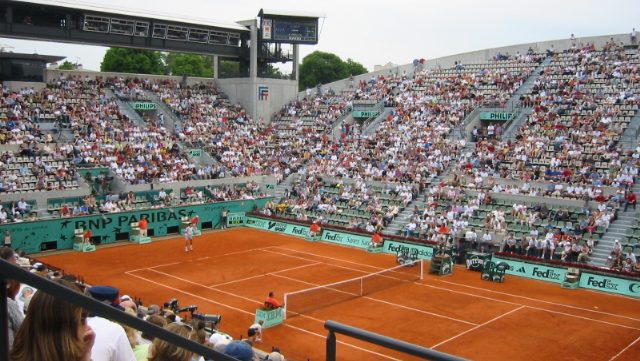
Over the last two years, men’s tennis has been divided into two clear categories, with world numbers one and two Jannik Sinner and Carlos Alcaraz leading the pack, separated from the rest of the field with a major (pun intended) gap. The pair have shared the last nine Grand Slam titles between them. However, this year’s French Open took a turn, with Alcaraz withdrawing pre-tournament due to an injury, and Sinner facing an upset by Juan Manuel Cerúndolo in the second round. While this news may have ruined parlays worldwide, I found this to be a refreshing change of pace, as it allowed another player the chance to break the duopoly over Major Finals that Sinner and Alcaraz have held for the last two years. Some players capitalised on this chance and may have altered the way their careers will be remembered, while other favourites failed to seize the opportunity.
Zverev Breaks the Streak, but an Asterisk Remains on his Biography
Alexander Zverev has had the type of career that most players dream of, with 25 singles titles, three major finals appearances, and two ATP Finals titles. Zverev was part of the highly touted “Next Gen” players who were due to replace Federer and Nadal, but were quickly overtaken by Sinner and Alcaraz. Zverev’s resume up to now was one representing a ‘good,’ but not great, tennis player. His gruelling victory in a five-set win in France over Flavio Cobolli on 7 June cemented him as a Grand Slam champion. Zverev remained composed throughout the final as he came back from a tricky fourth set.
However, for many including myself, his victory was a bitter pill to swallow. In 2021, Zverev faced allegations of domestic violence from two former partners, which he has consistently denied. German judicial proceedings initially issued a penalty order against him. Because a penalty order is not a formal trial verdict, it did not constitute a finding of guilt. The case was ultimately discontinued by the court after an agreement was reached between the parties, leaving the penalty order groundless and resulting in no admission by Zverev or determination of his guilt. An independent investigation commissioned by the ATP concluded in 2023 with an inconclusive finding due to insufficient evidence. Following years of scrutiny over its handling of such matters, the ATP launched a formal Safeguarding Programme in January 2026 to establish a global framework for responding to domestic violence and abuse.
Despite the ATP’s work, tension surrounding the topic persists. Following his French Open victory in June 2026, Zverev abruptly ended an interview with the French sports newspaper L’Equipe after being pressed on the public disquiet over the past allegations. The incident has renewed debates among sports journalists and fans over how sporting administrations and media houses balance an athlete’s on-court achievements with serious off-court allegations.
Youth Wins, Italian Tennis Shines
While the French Open was missing its major stars, it certainly showed that the future of men’s tennis is remarkably bright as several young players announced their arrival on tour. Brazil’s 19 year old João Fonseca was one of the standout performers of the tournament, with an aggressive baseline game to dispatch Djokovic in a thrilling five-set match in the third round. Czechia’s 20 year old Jakub Menšík and Spain’s 19 year old Rafael Jódar made deep and impressive runs into the tournament’s final rounds.
No country, however, can rival Italy’s tennis program. For decades, Italy had relatively limited success at the highest level, but the nation has radically changed its infrastructure and investment in tennis, particularly at the grassroots level. In 2026, Italy hosted 40 ITF Futures events and over 19 ATP Challenger events. These offer younger players competitive experience, and the chance to gain vital ranking points and prize money. Having a strong network of international tournaments at home also grants opportunities for domestic talent to climb the rankings quickly, without worrying about international travel expenses. With four Italian players in the top 20, two reaching the semi-finals, and young Flavio Cobolli pushing Zverev to a five-set match in the final, it is safe to say that Italian tennis is in great hands.
Seeds fail to seize a golden opportunity
With Sinner and Alcaraz out, the field was left wide open for some of the more experienced seeded players on the tour to seize the chance. Novak Djokovic suffered a tough third-round defeat in five sets to Fonseca. At 39, Djokovic remains an incredible player, but his speed and stamina have understandably declined, leaving fewer opportunities to expand on his historic Grand Slam tally. Casper Ruud also entered the tournament as a clay-court specialist, boasting two previous French Open final appearances. While Ruud fought admirably, he was no match for Fonseca’s incredible backhand, and the Brazilian took him apart in four sets. Meanwhile, the performances of talented veterans Andrey Rublev and Félix Auger-Aliassime failed to answer the questions that have followed their careers. Both possess undeniable talent, but once again failed to capitalise on a wide-open draw to make a deep Grand Slam run.
Players’ Union Protest Sheds Light on Revenue Sharing
Surprises at the tournament were not restricted to the court. Off the court, a dispute between the players and the Open drew significant attention. Several players participated in a coordinated effort to draw attention to the uneven distribution of revenue at Grand Slams. They argued that while these major tournaments generate record revenue each year from ticket sales and broadcasting rights, most of it does not flow to the players (very little of it trickles down to the competitors who serve as the ‘core product’ being sold). Players hence have argued that they deserve a larger share of the profits. This issue most severely impacts lower-ranked players, an issue perfectly illustrated by women’s finalist Maja Chwalińska. As a lower-ranked qualifier who fought her way to the final, Chwalińska initially struggled to afford her Paris hotel and accommodation costs, as Grand Slam prize money is only distributed at the end of the event.
While she will take home a life-changing $1.6 million runner-up cheque, financial precarity during the tournament highlights a greater conversation that must be had on revenue sharing.
With Alcaraz’s victory at the Australian Open this year, and Sinner’s continued dominance, the tour appeared destined to be heading for a duopoly of Sinner and Alcaraz, with no other contender in sight. However, this year’s French Open reminded everyone of just how talented the tour is, and how unexpected Grand Slams are. Zverev finally claimed the title that eluded him for so long, but questions about his legacy remain. Legally, Zverev was cleared of his allegations, but questions from the court of public opinion persist. With breakout performances from Cobolli, Fonseca, and Mensik; Men’s tennis has found its groove again. The biggest story from the Open was not Zverev’s victory, but the arrival of new contenders.