
I have missed out on many a thing. Concerts, parties, events, and plenty of other things. More than I can name. But maybe I shouldn’t be able to name them, since I didn’t take part. In the timeline that is my life, they can’t be plotted. They are not relevant to me.
Yet, as a society we have a habit of thinking ahead of the regret we might feel if we don’t attend this concert, this party, or this event. After all, how many times have you been told, ‘Do it, otherwise when you are older you will regret not having done so,’ or ‘The older I get the more I think about the things I haven’t done’? Even before coming to Oxford, I actively tried to break from this vicious, toxic, self-deprecating cycle. Oxford, as I am sure many students know, has a way of derailing your plans.
I didn’t know about the existence of the acronym ‘FOMO’ until 2024. Ambassadors made introductions on OppOx, a university bridging programme. I was sitting in the lecture theatre, and an ambassador was talking about how FOMO can make you feel anxious when you first come to Oxford. I didn’t yet know that FOMO stood for ‘fear of missing out’. I had to ask my friends what it meant after the presentation. Since then, I have not forgotten about FOMO.
There are moments in term where I don’t have the time to even think about FOMO. These weeks are packed beyond belief. When one deadline ends, you can’t even take a breath before immediately needing to shift gears to another task. As if the academic stress wasn’t enough, the scaffolding of your personal life will also come crumbling down. Or, at least, it will require some repair beyond your current means. No longer are you simply scrambling to finish your work, you are also just trying to stay afloat.
As the term concludes, the adrenaline will slowly begin to evaporate from your body. Your steps will lessen in pace, no longer rushing from a library, to another, to college, to someplace else. Your brain will be drained, resorting to minimum function. Finally, you will be liberated to ponder on all the things you missed out while hyperfocusing on work: the society events you had to ignore, the friend meet-ups you had to decline and the hobbies you neglected. This is the charm of the Oxford schedule. Here is where FOMO attacks me, I begin to spiral about all the things I could have done, had I only organised my time better.
I know that juggling the social, the academic, and the personal can be done. I see it done by people. They are thriving while I am out here surviving. I know that this can just be an illusion, the human manifestation of ‘the grass is always greener on the other side’. Sometimes these thoughts visit me, but they have evolved from resident to visitor. The visits are more fleeting and volatile. Sometimes I feel like I am successfully getting away from them.
But they have been replaced by a different kind of FOMO. This one isn’t about university life. It is not easy to define without sounding pretentious — so please bear with me .
I am painfully aware that there are more books, films, shows, and music pieces than I will be able to discover and consume. There are more out there than I will ever know. But being in Oxford adds another layer to this. There are so many references to Oxford in all the media forms, and so many books, films, and shows come from or revolve around Oxford, with My Oxford Year being one of the most recent ones. One of my favourite books based in Oxford is The Oxford Murders by Guillermo Martínez. It is a short, fast-paced book about a maths student trying to solve murders with the added element of some math problem, equation, or theorem that I don’t have the abilities to comprehend. These are a few of the things I had time to watch and read.
Apart from getting many media references, Oxford is also a hub for many events. In a bid to combat a bout of FOMO I bought a ticket to the Zadie Smith talk on February 5. On the day of the talk I was recuperating from a near all-nighter and was strongly debating on whether to attend. Sleepily, I got ready and made my way in the pouring rain. The moment the interview began, I was elated with my decision. This would be one of the highlights of my term by far.
The talk was about Zadie Smith’s new collection of essays Dead and Alive. I was not an avid reader of essays until this moment. In line, I waited for over an hour to get my book signed. I was the last person, not including the organisers, remaining. To kill time while waiting, I started reading the book. I was enthralled with the parts I managed to read. Then it was my turn to get my book signed and it was such a fun moment. I asked her to also sign my cousin’s Polish copy of The Autograph Man, upon seeing it Zadie Smith immediately asked if it was in Polish and said the cover is one of her favourites. Short, but unforgettable.
One of the more poignant points Smith made in her talk was that if you want to write, just do it, especially when the readership might be small as then you don’t have to worry about what people think of your writing. This changed my perspective about writing. I listened to this just after my first column was published and it made me realise that writing is not just done to be read. I like to think of the idea that people enjoy reading what I produce, but before that should come to terms with the fact that I have the privilege to express myself through my writing.
As I was considering applying to The Oxford Blue, I was actually quite worried that I wasn’t going to get a writing position because the topics I want to write about may not be perceived as relevant to the student experience. But with this in mind, I applied anyway. Another time when I fought against FOMO. Spoiler alert, if you are reading this, then I did get the position of columnist. This, I thoroughly enjoy.
I write this column to show how media, like films, shows, books, and music among other artistic and cultural mediums, are so relatable to us. This is not an original thought, but an attempt at trying to humanise media in relation to myself. Hence, one of the essays in Dead and Alive really spoke to me as someone trying to write. The essay challenged the idea that writers of fiction should only write about characters and events that they can directly relate to; for example, a female writer should only write female characters and about the female experience. Smith fights this stance by suggesting that since writing is about exploration and creation, one should be able to write the characters they choose to. This reminded me of why I read — to discover places I have never visited and people I have never met. I would not know about these places and people otherwise. It is unlikely I will get to travel the world and meet all the different kinds of people that live in it. This gives me FOMO.
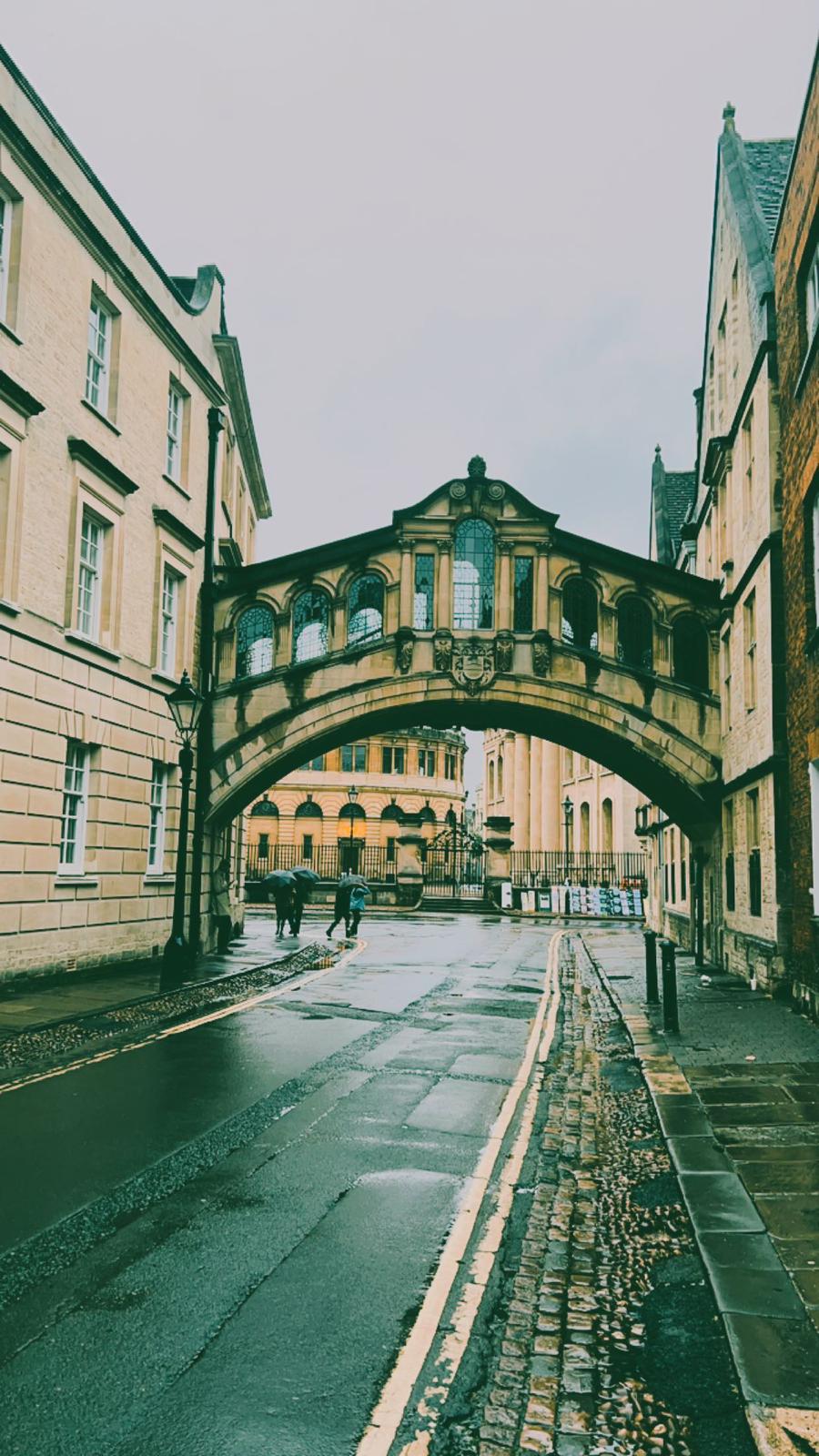
Aside from the student life, Oxford is bustling with museums, libraries, bookshops, monuments, and architecture from north to south, from east to west. I realise I am not interacting with these as much as I should, given that my time in Oxford is probably finite. Every term I set out a list of things I will do and places I will see while in Oxford. Rarely, if ever, I get to tick off more than two things. One of my biggest disappointments is that in my first Christmas vacation, I set out that I will read Babel in Oxford, to fully immerse myself in the story — yet another Christmas vacation has gone by and all my copy of Babel has done is gather dust. I am running out of time.
I need to be more positive. Even though I might not read Babel before the end of my degree, I will have read other things. No one can do everything. That is just a fact of life. We all run out of time for something. I am not the best at making the most of the Oxford societies or events, I don’t network, but I am enjoying my time here. I plead to myself, and I will continue to do so, to enjoy what I’ve done, think about some of the things I will do in the future, and to not get conquered by FOMO. Instead, I will be thrilled to look forward to encountering some unknowns, but not all. Some unknowns are meant to remain so.