

Few cities have transformed themselves as rapidly or as deliberately as Dubai. Rising from a modest trading port on the Arabian Gulf, the city has become a global reference point for large-scale urban ambition, architectural experimentation, and master-planned living. What sets
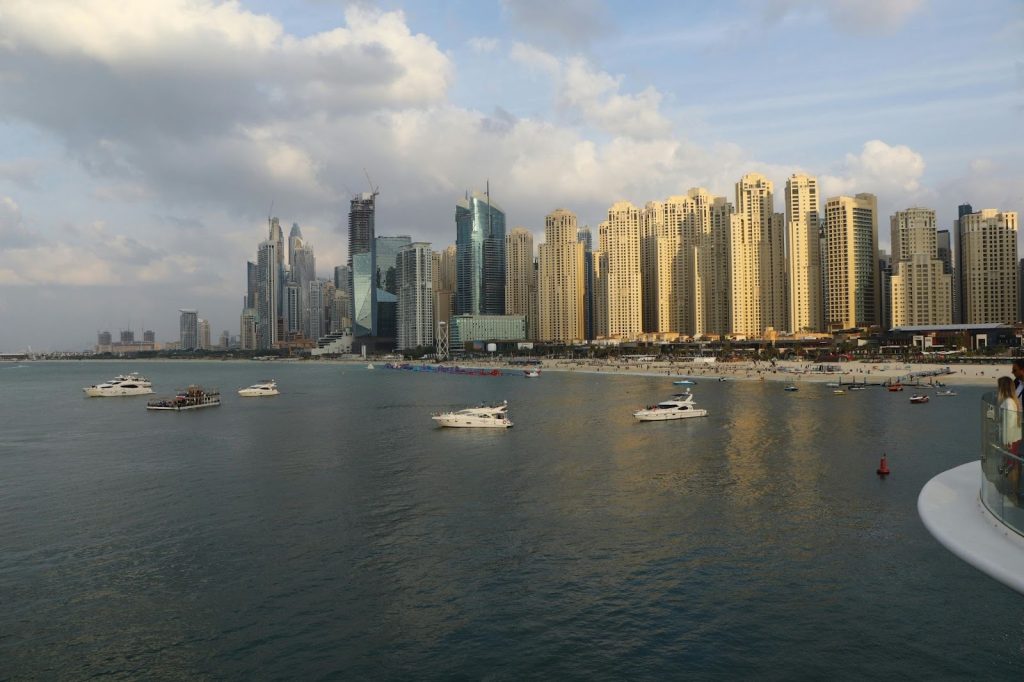
Dubai apart is not simply the speed of its development, but the clarity of vision behind it: projects are designed not as isolated landmarks, but as interconnected environments that blend commerce, culture, and everyday life.
For British visitors and long-term residents alike, Dubai presents a built environment where urban planning, infrastructure investment, and lifestyle considerations converge in ways rarely seen elsewhere.
Master Planning at a City Scale
Dubai’s most recognisable projects are unified by an approach that prioritises master planning over incremental growth. Rather than allowing neighbourhoods to evolve organically over decades, developments are conceived as complete ecosystems from the outset, with transport links, public spaces, residential zones, and commercial centres integrated into a single framework.
This planning model is shaped not only by public policy but by close coordination with developers and top real estate companies in Dubai, whose role extends beyond construction into long-term community design and management. The result is an urban fabric that reflects intention rather than accumulation.
This approach has allowed the city to avoid some of the fragmentation seen in older urban centres. Districts such as Downtown Dubai, Dubai Marina, and Business Bay function as self-contained communities while remaining seamlessly connected to the wider city through metro lines, arterial roads, and pedestrian infrastructure.
For residents, this translates into reduced commute times, access to amenities within walking distance, and a strong sense of spatial coherence.
Architecture as Identity
Dubai’s skyline is instantly recognisable, but its architectural language goes beyond visual impact. Landmark towers, waterfront developments, and mixed-use complexes are designed to signal confidence, innovation, and long-term intent. Height and scale are used not merely for spectacle, but as expressions of density and efficiency in a city where land use is planned with precision.
Many projects draw inspiration from both global design principles and regional context. Shading structures, orientation to manage heat, and the use of open courtyards reflect an understanding of climate alongside aesthetics. The result is a built environment that is unmistakably modern, yet increasingly attentive to livability rather than symbolism alone.
Residential Developments Built Around Lifestyle
At the heart of Dubai’s most successful projects is a focus on lifestyle as a defining feature of urban living. Residential developments are rarely standalone; they are embedded within communities that offer retail, dining, green spaces, fitness facilities, and cultural venues.
This model has proved particularly attractive to international professionals and families relocating from the UK. Access to international schools, healthcare facilities, and recreational infrastructure is often factored into development plans from the earliest stages. As a result, many residential districts operate less like housing estates and more like integrated town centres.
The emphasis on quality of life also extends to design standards within homes themselves. Spacious layouts, natural light, and modern amenities reflect expectations shaped by global living trends, while maintenance and management structures aim to deliver consistency over time.
Infrastructure as the Foundation of Growth
Dubai’s architectural achievements would not be possible without parallel investment in infrastructure. Transport networks, utilities, digital connectivity, and logistics systems are developed in tandem with residential and commercial projects, ensuring that growth is supported rather than strained.
The Dubai Metro, one of the most advanced urban rail systems in the region, plays a key role in linking major developments and reducing reliance on private vehicles. Road networks are designed to handle high volumes efficiently, while ongoing expansion reflects future population projections rather than reactive planning.
This infrastructure-first mindset has allowed Dubai to scale rapidly while maintaining a high standard of urban functionality, a factor often cited by long-term residents as central to the city’s appeal.
Economic Vision Embedded in the Built Environment
Dubai’s recognisable projects are also expressions of its economic strategy. Free zones, financial districts, logistics hubs, and tourism-focused developments are deliberately positioned to support diversification beyond oil, reinforcing the city’s role as a global business and travel centre.
Mixed-use developments encourage proximity between work and home, reducing friction between professional and personal life. Office towers rise alongside residential buildings, hotels, and cultural venues, creating districts that remain active beyond traditional working hours. This continuous use supports local economies and fosters a sense of permanence rather than transience.
For British businesses operating in the region, this environment offers clarity and stability, with physical infrastructure reflecting long-term policy direction rather than short-term speculation.
Sustainability and Long-Term Adaptation
While Dubai is often associated with scale and speed, recent projects demonstrate a growing emphasis on sustainability and adaptability. Energy efficiency, water management, and smart-city technologies are increasingly integrated into new developments, reflecting both environmental realities and global expectations.
Urban green spaces, shaded walkways, and community-focused design elements are becoming more prominent, signalling a shift toward human-centred planning. These measures aim not only to reduce environmental impact but also to enhance comfort and wellbeing in a challenging climate.
The city’s willingness to reassess and refine its approach suggests that its most recognisable projects are not endpoints, but stages in an evolving urban experiment.
A City Designed With Intent
Dubai’s transformation has never been accidental. Its skyline, neighbourhoods, and infrastructure reflect deliberate choices about how a modern city can function, grow, and present itself to the world. For visitors, the result is a destination that feels cohesive and forward-looking. For residents, it offers a living environment shaped by planning rather than chance.
Dubai living, at its core, is defined by vision — not just in what is built, but in how those projects fit together to support everyday life. That coherence is what makes the city’s most recognisable developments more than architectural statements; they are the physical expression of a long-term urban philosophy that continues to evolve.