
Elana Roberts
COP30 took place in Belém, Brazil from 10 November to 21 November 2025. After two years of COPs held in petrostates (Dubai and Azerbaijan), Brazil’s status as one of the most biodiverse countries in the world makes it particularly vulnerable to the risks of climate change. Therefore, many hoped that the President of COP30, Ambassador André Corrêa do Lago, would spearhead radical and decisive policy missing from the recent COPs.
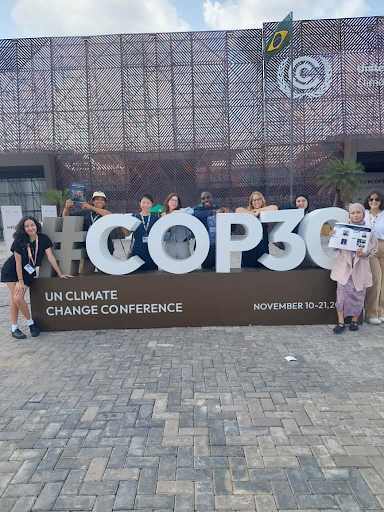
I was lucky to be able to interview three attendees of the event on their experiences of COP30. Not only was it incredibly inspiring to observe their passion for climate advocacy, but their explanation of the actual experience of attending a COP was detailed and insightful.
Merna A. Elboghdady is a climate policy specialist currently serving as the Global Youth Climate Training Programme Lead for the Global Youth Coalition (GYC), working alongside partners at Oxford Net Zero and The Smith School. She attended COP30 professionally, supporting five bursary recipients of the Global Youth Climate Training.
Rosalind Chaston is the Knowledge Exchange Officer at Oxford Net Zero, with the Smith School of Enterprise and the Environment. She attended COP30 to represent a project from Oxford Net Zero and the Net Zero Policy and Regulation Hub on green approaches to public procurement, hoping to bring in the “latest academic insights to inform the conversation” between multiple governments.
Isha Yadav is a 3rd year undergraduate biologist at St Hugh’s, and Co-President of the Oxford Climate Society (OCS). She attended COP30 as a youth delegate for ClimaTalk: an international, youth-led organisation working to demystify climate policy. She was also there as a representative for OCS in the University of Oxford Delegation, marking the first time Oxford has given a badge to an undergraduate.
Elboghdady, Chaston, and Yadav each emphasised the reciprocal nature of attending COPs; it not only presents an opportunity to share and advocate one’s own project, but also offers the possibility to learn and connect with other groups. Elboghdady explained to me that it was at COP27 that the idea for the Global Youth Coalition first emerged from a group of climate advocates who noted the persistent challenges young people face when navigating the UNFCCC system as a whole.
Yadav also highlighted that COPs provide a chance to “talk to people I likely never would have connected with, and listen to their perspectives”. She noted the global nature of COP attendees, and the significance this holds for a climate conference as “impacts of climate change are delocalised and vary globally”.
But first, what is a COP?
COP stands for ’Conference of the Parties’, representing the key decision-making events for United Nation (UN) environmental treaties. In particular, the United Nations Framework Convention on Climate Change (UNFCCC) holds a COP in a different country each year. The five UN regional groups – consisting of The African Group, the Asia-Pacific Group, the Eastern Europe Group, the Latin American and Caribbean Group, and the Western Europeans and Others Group – host the COP within the region on an alternating basis.
2025 took COP30 back to Brazil, where the UNFCCC was first opened for signatures back in 1992. The framework was a historical move towards raising discussions about climate change to an international and institutional scale. It now has a near universal-level participation with 198 party members: 197 States and the European Union.
The UNFCCC relied on reports from the Intergovernmental Panel on Climate Change (IPCC) to highlight not only that there was a growing threat from greenhouse gas (GHG) concentration in the atmosphere, but also that human activity had a role in causing it. Significantly, the UNFCCC Treaty also acknowledged that some countries, largely industrialised countries put into ‘Annex I’, had a greater responsibility in mitigating the climate crisis. This was done by grouping countries into three categories based on their level of responsibility.
Until this moment, international cooperation on what was increasingly being understood to be a global crisis was heavily limited by the lack of a framework to discuss the issue and potential responses. The UNFCCC was a significant step to actually implementing restrictions on GHG emissions, although it would still take three years before the first actual COP took place in 1995.
These days, COPs operate through a particular structure. Generally, the conference begins with plenary sessions where national representatives raise issues to be on the agenda for negotiations. The agenda is divided into different topics which are discussed in specific negotiation groups. Meanwhile, other meetings and talks are held by individual national representatives, NGOs, and stakeholders in climate discussion.
With only two weeks to discuss a multitude of challenges, it is common that national representatives do not reach consensus on several items on the agenda. These are left to be discussed at the next COP. While such a system could be described as inefficient, the structure and policy outcomes have come a long way since the first COP.
Significant Past COPs
The first COP took place in Berlin, Germany. This COP was in some respects used to test the different ways the conference would be structured in the future. In particular, it was emphasised that individual country commitments to reducing fossil fuel emissions were not sufficient. Clearly, in order to achieve the goals of the UNFCCC, some kind of international framework for achieving adequate country commitments would be necessary.
Kyoto Protocol
Developed in 1997, the Kyoto Protocol was the first effort to address the issue that had emerged during the proceedings of COP1: how to develop a framework for individual countries to operate on an international scale. Significant targets were set to cut emissions in 38 industrialised countries between 2008 and 2012 by 5.2 percent.
Under the UNFCCCs ‘Common but Differentiated Responsibility Principle’, the reduction commitments were focused on countries that had the greatest historical responsibility for GHG emissions. While this was a clear effort to remedy this historical inequality, as a consequence developing countries were not held to the same climate commitments.
The United States, which had been a driving force behind the formation of the UNFCCC, later refused to ratify the Protocol. The US Senate cited concerns about the potential negative impacts that the treaty would have on the US economy, and an objection to the implementation of the Common but Differentiated Responsibilities Principle. Countries such as China and India, which were rapidly growing in emissions, were not beholden to the same responsibilities as the US under the Kyoto Protocol.
As a result, the Kyoto Protocol was not successfully implemented. Although the overall goals were achieved, as emissions dropped by ~7-12 percent in the initial commitment period, this has been attributed to former Soviet Union States no longer using the USSR emission benchmarks. These had been significantly larger than their actual business-as-usual emissions levels.
Paris Agreement
The Paris Agreement was built on similar principles to the Kyoto Protocol, with fundamentally different implementations of these principles.Adopted at COP21 in Paris, France, it became active a year later in 2016. Unlike the Kyoto Protocol, which addressed the industrialised countries that ratified it, the Paris Agreement was a bottom-up agreement that was legally binding for all countries that ratified it.
The key overarching goal of the Paris Agreement was to stop global temperature from rising 2 degrees above pre-Industrial levels by 2100, and to try to limit temperature rise to 1.5 degrees celsius. Other crucial aspects of the Agreement included achieving ‘climate neutrality’, conservation of GHG sinks, increasing understanding of the Loss and Damages associated with climate change, informational transparency, and significantly, Nationally Determined Contributions (NDCs).
The Paris Agreement required that signatory countries operate in five-year intervals for increasingly ambitious climate action. Each country was required to submit their national climate action plans, their NDCs. This means every country is responsible for their own actions in reducing climate change.
While this begins to address the issue raised in the Kyoto Protocol of the lack of consideration towards the emissions of developing countries, it did not solve it. The Paris Agreement may be legally binding, but the UNFCCC has little capacity to enforce it.
Furthermore, the NDC framework lacked a governing body to ensure that all the contributions added up to the total necessary to achieve the goal of not increasing 1.5 degrees celsius by 2100. Consequently, a gap in ambitions emerged where the sum of all NDC actions was simply not enough, yet no singular country could be forced fairly to make up the gap.
Countries are increasingly disregarding the Paris Agreement. Notably, the US pulled out of the Paris Agreement in 2017 and again in 2025 under President Donald Trump’s administrations. While other global superpowers have not yet followed suit, the US withdrawal has changed attitudes towards agreements at COPs, and presents a threat to the future of international climate policy cooperation.
Hopes for COP30
One key hoped-for outcome of COP30 was the implementation of a ‘fossil fuel roadmap’, explicitly naming a transition away from fossil fuels in the Decision document. All three of my interviewees emphasised that they had hoped that COP30 would result in powerful implementation and action on key issues such as the fossil fuel phase out, deforestation, and the loss of biodiversity.
In particular, Elboghdady said that there had been a significant build up in expectations about COP30. Not only was it the first COP to be held out of a petrostate in two years, but Brazil also has a unique stake in the climate crisis. Home to key biodiversity hotspots of the Amazon Rainforest, the Cerrado, and the Atlantic forest, Brazil is a crucial part of the global carbon cycle.
Furthermore, there is a large population of Indigenous peoples in Brazil, who often act as environmental stewards, powerfully maintaining ecosystem functions despite the increasing threat to Indigenous land from land appropriation, land use change, and deforestation. It was hoped that COP30 might platform the role of Indigenous peoples in climate conversation more, as well as escalating discussion of human rights-related concerns.
The Experience of COP30
The two weeks that COP30 takes place during are packed with talks, negotiations, presentations, speeches and demonstrations. Elboghdady told me that after attending multiple COPs, some of the best advice she had received about attending these events was that “you need to understand your role at COP very clearly and what you’re there for, what you’re there to do and how you’re planning on doing it, or else your leg gets pulled apart, basically.”
COP30 was both Chaston and Yadav’s first time experiencing a climate COP in person. Chaston highlighted how dazzling entering the main ‘Blue Zone’ was, the venue for official negotiations and national pavilions. It was packed with “thousands of people milling around, speaking all languages, searching for the best coffee, and coping with the heat and humidity together”.
Yadav further emphasised the overwhelming scale of the conference, and the necessity to learn from the people around her to “make sense of the highly technical negotiation processes, and all the concurrent timetabled events”. She also spoke about how “the protest presence was a strong reminder of how far-from-perfect COPs are, especially with the lack of indigenous voices at this ‘forest COP’”.
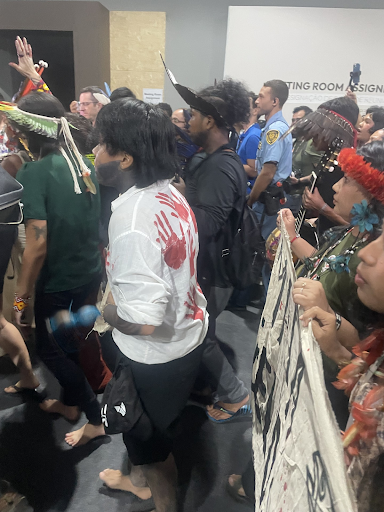
While COP30 was occurring, international media was filled with headlines about the fires that broke out in the tents and the break into the COP30 venue by peaceful Indigenous protesters on 14 November. Later that day, thousands of protesters gathered in the city, seeking environmental justice for marginalised groups all over the world.
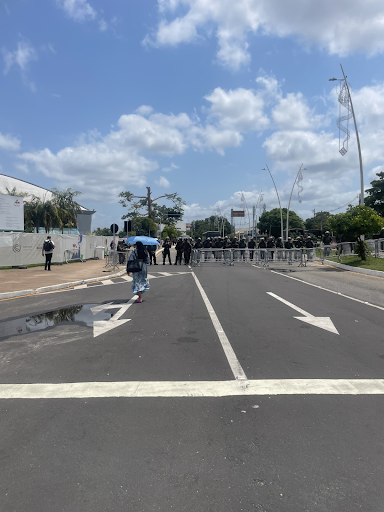
Although COP30 reached a record number of Indigenous participation, with approximately 5000 members participating in the COP, it was evident that Indigenous people were still excluded from decision making in the negotiation rooms. On 14 November, approximately 50 people from the Munduruku Indigenous group prevented access to the Blue Zone in protest at the lack of their representation in the COP. Following the incident, Elboghdady noted the increased number of security personnel patrolling the venue, a part of the UN and Brazilian response to the protest.
In many ways, my interviewees highlighted that Belém seemed unequipped to handle the scale of the COP. Not only were there significant challenges to navigating the shuttle bus system in the city, but the heat and intensity of the conference presented physical challenges to attending the conference, which reduced the number of people who were able to attend the COP.
The Outcomes of COP30
After two intense weeks of negotiations, often running late into the night, the Brazilian presidency released the Belém Package which compiled the strategies that had been successfully agreed upon. While many countries and organisations came away disappointed from a COP that ultimately felt no different from those the years before, there were several key positive takeaways.
Significantly, countries came to an agreement to triple the financing for climate adaptation mechanisms in developing countries by 2035. This would raise the funding to $120 billion a year, providing crucial support to countries in the face of the growing threats of climate change. While this is lower than the cost of adapting to climate change, predicted by the UN to be approximately $387 billion annually by 2030, it represents a promising commitment to global financial collaboration.
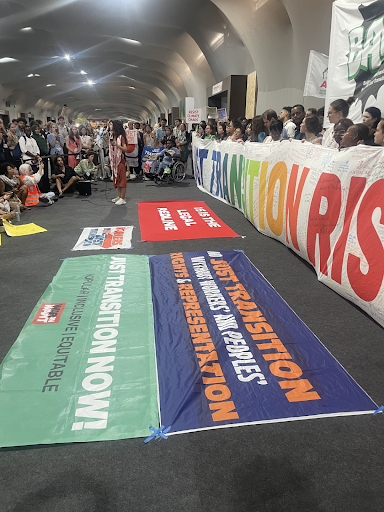
The conference also agreed to implement a just transition mechanism through the Belém Action Mechanism (BAM). This is a human-centred mechanism designed to reduce “the fragmentation of global efforts for just transition to a low-carbon economy”. Yadav noted that the implementation of this mechanism “came with calls to change our understanding of climate from an environmental crisis to a global and intersectional problem.” She argued that this “should strengthen the imperative to act and increase climate engagement across sectors”.
Yadav was also both glad about the focus on climate and biodiversity action. The Tropical Forest Forever Fund in particular seeks to provide funding to countries committing to preserving tropical forests in a large multilateral fund system.
Chaston highlighted that an “area of particular hope is the initiative led by Colombia and the Netherlands to co-host the first International Conference on the Just Transition Away from Fossil Fuels in April 2026 to create a roadmap for phasing out oil, gas, and coal.” This international conference seeks to advance the transition from fossil fuels, an idea which was supported by over 80 countries at COP30.
Elboghdady does show uncertainty as to whether this is the right move. Although it is positive to have a conference for it, the initial goal was for it to be implemented in COP30. Furthermore, the commitments from countries in the proposed conference will still remain voluntary. The separation of it also means that Elboghdady worries there will be less of a push in future climate COPs because there is another space discussing it.
Limitations of COPs
Chaston, Elboghdady, and Yadav all expressed disappointment at the ultimate outcome of COP30. Although several positive and potentially significant policy frameworks were passed, the fossil fuel roadmap that so many were hopeful for was blocked by petrostates including Saudi Arabia and Russia, and large fossil fuel consumers including India.
This marks a regression in climate policy progress from the pledge in COP28 to “transition away from fossil fuels”, as this time a transition was not even mentioned in the Global Mutirão (the policy document summarising the outcomes of COP30).
Yadav said: “From a COP branded on implementation and action, I was disappointed by the outcomes […]. As with many before, this COP was not immune to refusals to cooperate.” Chaston further emphasised that “in many respects [the policy outcomes] fall short of what is needed to limit global warming, support adaptation, and halt the irreversible loss of biodiversity.”
In addition, Chaston noted that a particular matter of worry for her “revolves around the undermining of the IPCC, the attempts to muddy waters around basic climate science, and the push to delay the publication of reports to inform climate action in the coming years.” Climate communication is increasingly under pressure, making clear and informed climate science and policy information all the more vital.
Elboghdady also stated that the presence of fossil fuel lobbyists at the conference was a particularly disheartening part of the experience. Over 1600 fossil fuel lobbyists were permitted to attend COP30, outnumbering every country’s delegation apart from the Brazilian delegation. This meant one in every 25 participants was a fossil fuel lobbyist.
One important distinction Elboghdady suggests should be made clear is the difference between people who work for the fossil fuel industry and those who are actively lobbying for the fossil fuel industry. She said that in her experience at the conference, often people who just work within an industry have “open hearts, willing to have a conversation to transition away” while active lobbyists maintain more aggressively pro-fossil fuel and limited attitudes not in keeping with the goal of the COP.
As the protests in Belém demonstrated, key voices in the climate crisis are being excluded from the negotiating space. While COP30 had a historic attendance of Indigenous peoples, in many ways they were still excluded from actually having input in the Blue Zone of the COP. Only 14 percent of the Indigenous people present gained access to the Blue Zone, limiting their ability to reach governments and NGOs with more significant influence over COP proceedings.
But do COPs remain important regardless?
“I think it’s what we have, right?”
Ultimately, Elboghdady’s muse on the value of COPs as a structure encapsulated all the interviewee’s sentiments. The lack of enforceability associated with the UNFCCC is a major challenge facing all global policy, but this does not mean that it should be abandoned as a framework for climate policy.
Restricting the attendees in order to reduce flight-related emissions could result in the restriction on access granted to civil society participants. Extending the length of the COP might reduce the overwhelming schedule of the conference and increase the amount of progress made on the agenda, but it also raises debates on how much longer to possibly make it. Countries cannot sustain a month long conference with 42,618 people present.
Chaston highlights that “in the current geopolitical climate, the fact that (almost) the entire world can still come together and agree on anything in itself is remarkable.” It cannot be ignored that COP represents a powerful and near-unique example of global cooperation, even as concerns arise about specifics of the conference design.
Ultimately, the positives of climate COPs as a model for global policy cooperation for the climate crisis need to be protected, whilst the limitations must be addressed. As Yadav points out, “simply having indigenous peoples or youth present at the conference doesn’t equate to meaningful engagement: these voices need to be prioritised”.
COP31 is due to be held in Antalya, Turkey with Australia appointed as the President of negotiations. Having heard from Merna Elboghdady, Rosalind Chaston, and Isha Yadav firsthand on the distinctive and intense experience of climate COPs, I look forward to observing the outcomes with a fresh new understanding of what is happening behind the scenes.