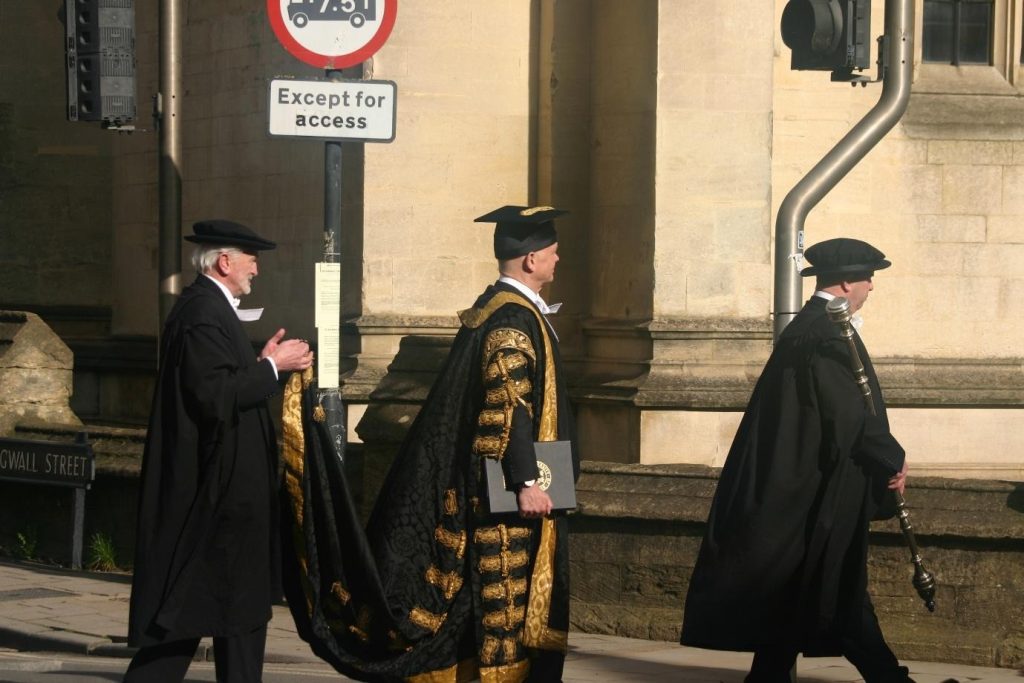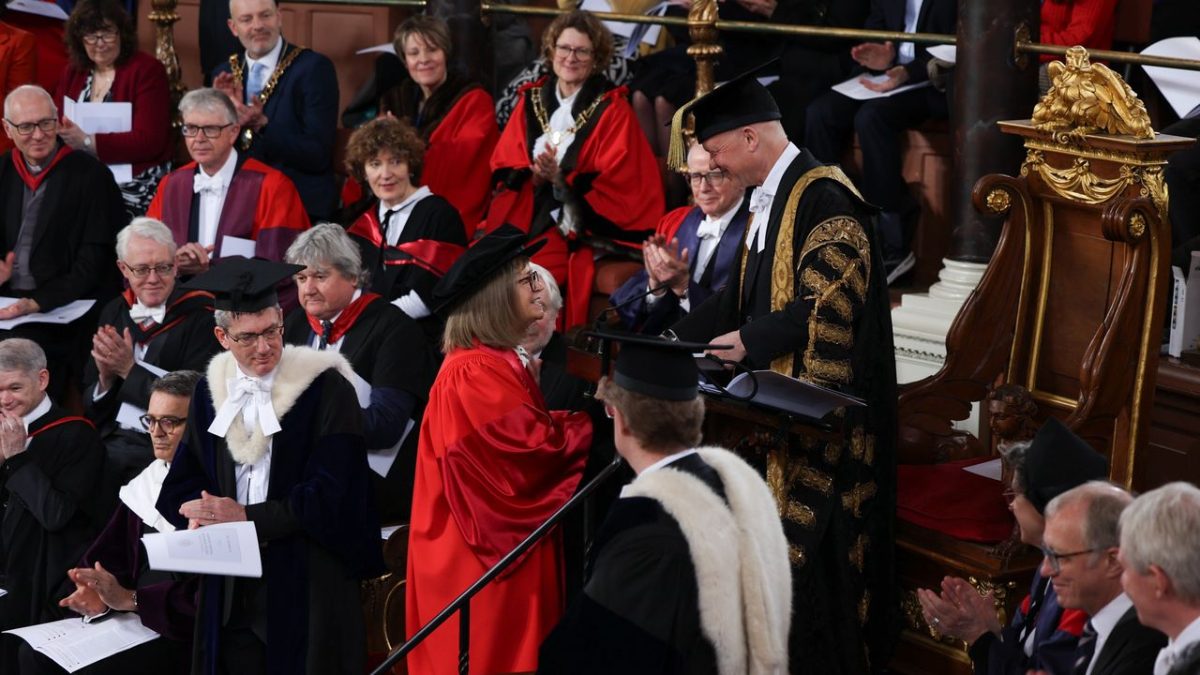
On 24 February, Lord Hague, the Chancellor of the University of Oxford, conferred honorary degrees upon eight individuals in a Special Honorary Degree Ceremony at the Sheldonian Theatre, to mark the first anniversary of his inauguration as Chancellor.
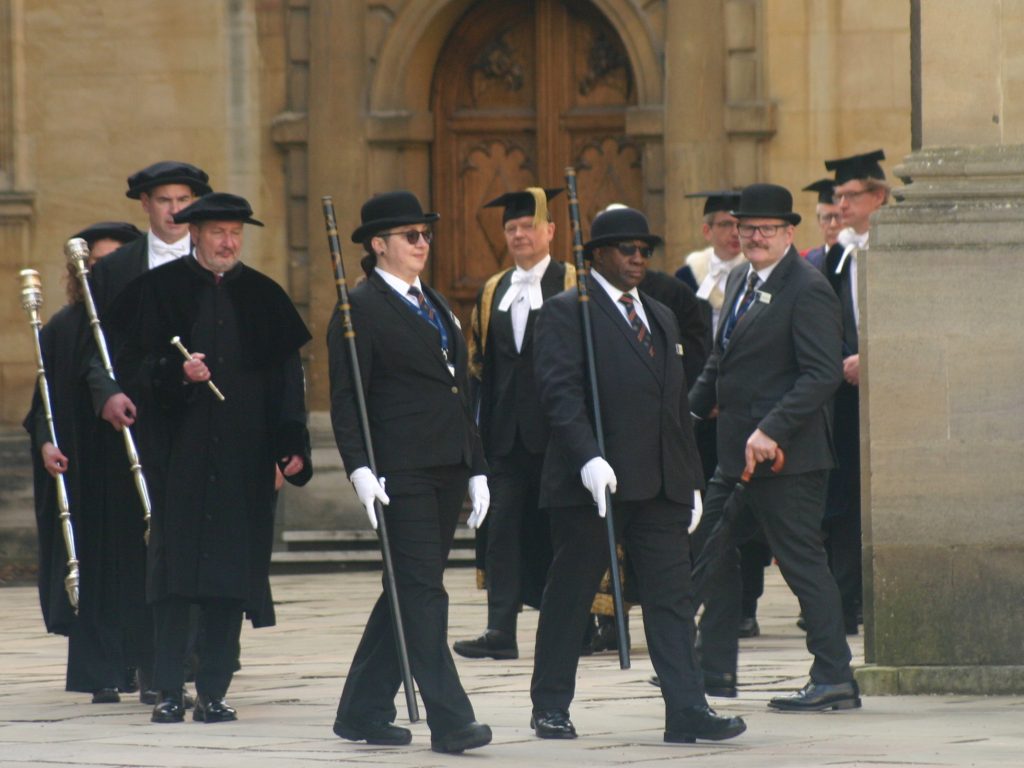
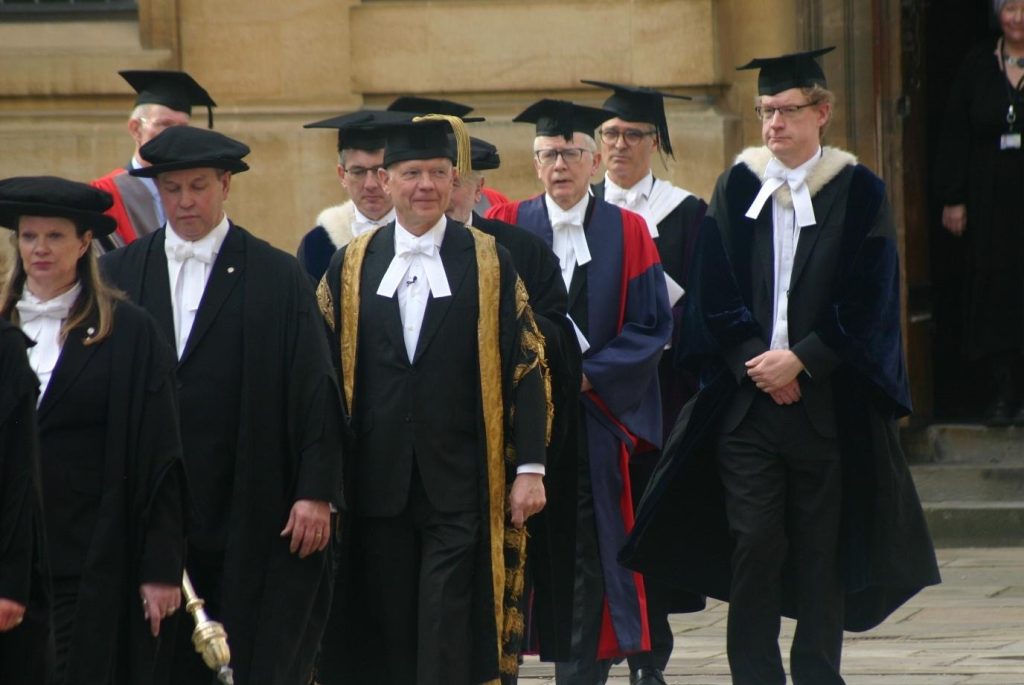
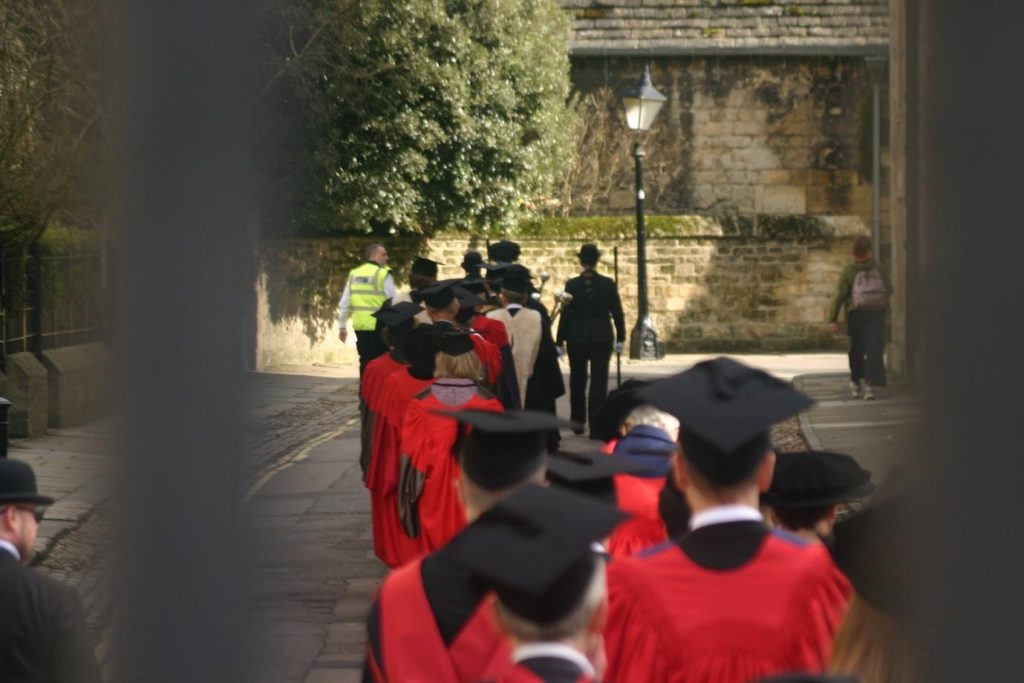
The ceremony took place at 11.30; staff, current and retired members of Congregation, students, Oxford University alumni, and academic visitors were invited to attend by booking tickets online. The ceremony was followed by a procession through Oxford from the Sheldonian Theatre to the Chancellor’s alma mater, Magdalen College.
Lord Hague said that he was “delighted to honour eight exceptional individuals today, whose achievements and dedication to their respective fields has been a personal inspiration to me. In a ceremony that reflects Oxford’s history and purpose, we celebrate honorands devoted to service, creativity, scholarship and leadership, whose work has made a profound impact on the world in which we live.”
The eight recipients of honorary degrees were: Lady Elish Angiolini, a lawyer, academic, public servant and former Principal of St Hugh’s College; John Kerry, the 68th United States Secretary of State; Dinah Rose, a barrister and President of Magdalen College; Professor Irene Tracey, a neuroscientist and Vice-Chancellor of the University of Oxford; Professor Sir John Curtice, Professor of Politics at the University of Strathclyde, who plays a key role in creating exit polls for UK general elections; Christina Lamb, a best-selling author and Chief Foreign Correspondent for The Sunday Times; Dr Dominic Sandbrook, an historian and host of the podcast The Rest is History; and Isabella Tree, a writer and conservationist, whose work at the Knepp estate was featured in the 2024 documentary film Wilding.
Professor Irene Tracey said, ‘‘This is a very special moment in my life. To receive an Honorary degree from my alma mater by our wonderful new Chancellor, Lord Hague, is both a privilege and a joy. I will treasure what it signifies and continue to do my utmost to support Oxford, its staff, students and alumni in their extraordinary contributions to the world over.”
Meanwhile, John Kerry praised Oxford for being “synonymous not just with scholarship, innovation, and discovery but with the tradition of spirited debate which keeps the blood of governance flowing.” He stressed, “That’s a tradition all the world would do well to reinvest in today at a precarious moment for representative government and institutions globally.” For Kerry, “it is a privilege to share this honor [sic] with a group of distinguished awardees, and with all who are shaping Oxford’s history today.”
Lady Elish Angiolini described Oxford as “one of the happiest and fulfilling periods of my life’. She remarked, “Although I presided over very many Graduation ceremonies as Pro Vice Chancellor, I never contemplated being the recipient of this wonderful honour for which I am truly grateful.”
Similarly, Dr Dominic Sandbrook said, “I have incredibly fond memories of my time at Oxford,” adding that “I owe so much to the tutors who inspired my love of history and literature”. He continued by saying that “through my books and podcasts, I’ve been able to share my passions with readers and listeners all over the world,” and he described his honorary degree as an “unexpected honour” which “means the world to me”.
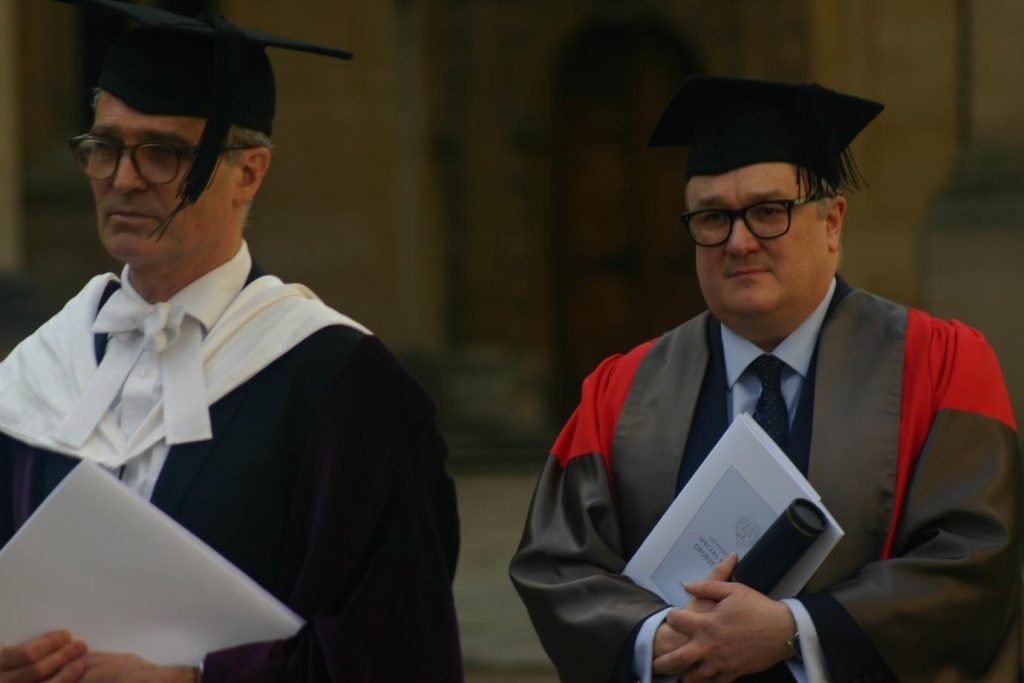
Meanwhile, Professor Sir John Curtice reflected on his time as a student and research fellow at Oxford, saying that it “provided the environment in which I was able to lay the foundations for the career I have had the privilege to pursue as an academic student of and commentator on public opinion and politics.” He continued by saying that “Today’s recognition of my work via the award of an honorary degree is well beyond the hopes and aspirations I had during that formative time in the dreaming spires – and consequently is much treasured.”
Christina Lamb recalled “the thrill of tearing open the thick brown envelope and seeing my acceptance to Oxford,” given that “no one in my family had ever been to university and it opened up horizons of which I had never dreamed.” For Lamb, receiving an honorary degree is “a recognition of all those many people round the world who have bravely told their stories at a time when sometimes it can seem no one is listening.”