
“Oh, oh! Agony, agony! Again the awful pains of prophecy are on me, maddening as they fall… What if no man believe me?”
Thus cries the tortured Cassandra in Aeschylus’ seminal tragedy Agamemnon. Cursed by Apollo with a gift of prophecy which is never to be believed, Cassandra is one of the most tragic figures in a play already marked by vengeance, betrayal, and murder. Wrestling with the fallout of war to the east and a political class buckling at the seams – it does feel as though Britain today echoes the tumult of Homeric Mycenae.
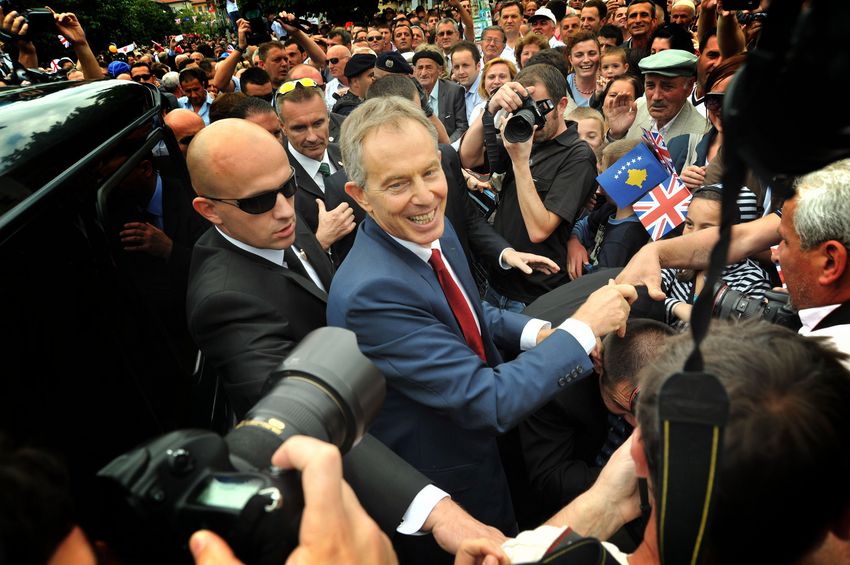
But where is Britain’s Cassandra? It seems only one person is ready to deliver some hard truths. The question is – will we listen? There is no greater damning indictment of our political class than the fact that our Cassandra, the one to offer the most prescient analysis of Britain’s present and its future, is a ghost of politics past: one Sir Tony Blair.
The release of Blair’s bombshell 5,700-word essay has sent shockwaves throughout Westminster. Entitled The Labour Party Is Playing With Fire Over Its Future and the Future of the Country, Blair is scathing on the failures of Keir Starmer’s government and the inadequacy of his potential successors, describing the party he once led for 13 years as having “an almost infinite capacity for self-delusion”.
Blair’s fundamental thesis is thus: Labour continues to indulge in debates about who it should be, and not what it should do. Successful governments don’t start with “a personality contest”, writes Blair, “they start with an idea, a project” and, crucially, “an analysis of what is wrong and a plan to put it right”.
Governing does not come naturally to the Labour Party. In its 126-year history, the party has been in government for only 35 years. It must, if not for the country then for its own survival, offer a credible alternative to Reform and the Greens.
Blair’s solution? A government dedicated to policy, not politics. In Blair’s vision, the same old, same old tax-and-spend Labour Party should be reinvigorated by a different kind of politics, that of the “Radical Centre”. For Blair, “the centre has a supply problem not a demand one”.
Blair’s provisional plan for the “Radical Centre” touches on ten points. Perhaps most unsettling for Labour MPs would be Blair’s approach to welfare: the “unaffordable” triple lock on pensions, ballooning incapacity benefits, and out-of-work support for young people are all the targets of his ire. This fiscal ticking time bomb should be any government’s first priority, as Britain’s welfare budget is projected to reach £400 billion by 2030, a staggering £91.5 billion increase from 2024. Every single other policy choice we want to make, on health or housing, schools or security, is being closed off by this reality.
Senior Labour figures know the issues Blair raises are real, and yet still none of them come forward with a credible plan. Instead, against this backdrop of an impending fiscal catastrophe, the Labour Party braces itself for an indulgent leadership election, in which contenders will surely aim to outdo one another with more and more impossible promises.
The likely contenders, former health secretary Wes Streeting and the mayor of Greater Manchester Andy Burnham, do not come across well in the text of Blair’s essay. Burnham, the clear favourite, responded to Blair with his own short essay in which he criticised the “striking weakness” of failing to discuss inequality. Yet even from his own essay, we are still no closer to gauging a plan from Burnham, the unelected hopeful who may very well be prime minister by Christmas.
I must confess, having been a constituent of Mr Burnham for a decade now, I have little confidence in his abilities. I will admit I am in the minority in this view, as Burnham has consistently been ranked among the most popular politicians in the country.
But who is the real Andy Burnham? As Blair acknowledges, he was “outstanding” during the New Labour years. Burnham was once a self-described “Blairite for Brown”, who entered politics as the protégé of Blair uber-loyalist Tessa Jowell. Yet Burnham showed a remarkable willingness to change, both his views and his loyalties. One of the most oft-quoted jokes in Westminster goes as such: “A Blairite, a Brownite, and a Corbynite walk into a bar. ‘Hello, Mr Burnham,’ the bartender says.”
The present iteration of Andy Burnham, however, has moved beyond all of these past allegiances. His decade of self-imposed exile to the provinces has defined the new ideological framework he has been at pains to promote – so-called ‘Manchesterism’ – a nebulous concept which is apparently both socialist and business-friendly.
But can his new thinking translate to the hostile world of Whitehall? Burnham’s first faux pas of the year, proudly telling the New Statesman that Britain should avoid being “in hock to the bond markets”, sums up the kind of wishful thinking a mayor can make that a prime minister cannot.
That is not to say Burnham has no achievements to speak of in his private Northern fiefdom. The Bee Network, his shiny new public transport system, was widely hailed as a policy success. But it is easy to succeed when you face no resistance, the network being both popular and, crucially, externally funded. When Burnham has attempted something bolder and more controversial, such as enforcing a Clean Air Zone, he has capitulated to political pressure.
In two decades of national malaise, the city of Manchester has been a stand-alone economic miracle. Yet this can hardly be attributed to the stewardship of the ‘King of the North’.
In fact, many of the choices Manchester had to make to achieve its success – embodied by the zealous former Leader of the Council Sir Richard Leese and his dynamic right-hand Sir Howard Bernstein – run antithetical to the politics of Burnhamism. Manchester in the early 2000s demonstrated a vociferous willingness to attract private investment, whatever the cost. The required trade-offs, and at times chumminess with developers and foreign companies, are fundamentally anathema to Burnham and the soft left of the Labour Party.
When faced with this reality, Burnham remains steadfast. “I’ve dealt with terrorism, wildfires, a pandemic, and through all of it we’ve had the highest growth in the country”. But the truth is Burnham has had little to do with any of these things; his time in Manchester has seen him shielded from consequences and shielded from difficulty. He has seized his PR moments, he has delivered some stern words to the Westminster establishment, and he has given us some buses, but aside from that, all that remains is shallow mediocrity.
Andy Burnham is not like other politicians. His Paul Smith-wearing, Oasis-singing, Northern-speaking 90s tribute act may prove popular. But, as the former Labour leader Neil Kinnock once said, “elections are won and lost in years, not weeks”. If a leadership election does take place, and Burnham does win, as he appears likely to do, he will not simply be a party leader, but a prime minister.
A prime minister has to make gruelling choices while faced with innumerable constraints. As Blair recognises, a party that chooses its leader based on charisma alone will “totter in the breeze”. Otherwise, the Labour Party will be doomed to repeat the mistakes of the floundering Starmer, and Nigel Farage will soon be waltzing up the steps of Downing Street.
I am fully aware that few people take such a hagiographic view of Sir Tony as I do, not least within the Labour Party itself. Inevitably, whenever Blair re-enters the public forum, the issue of Iraq will arise. His recent essay is itself riddled with questionable views on foreign policy, including proposing closer alignment with Trump’s US in its war on Iran.
Blair is not immune from criticism and like any long-serving politician he is unavoidably clouded by controversy. However, the instinctive reflex of members of the Labour Party to outright ignore anything their most electorally successful leader says will only prove to be damaging to themselves. To ignore the achievements of Blair’s domestic agenda is one of the greatest follies of Labour’s last two decades.
Crucially, whatever one thinks of him, Tony Blair is not the one seeking to become our next prime minister. Both Burnham and Streeting, once flagbearers for the Blairite cause, can shun his policy proposals all they like. However, the fundamental point still stands; even if they do not share his plan, they must have a plan. It still remains to be seen if either does.
For now, our Cassandra continues to shout into the wind. It seems, for the time being, these uncomfortable truths for the Labour Party and the country will continue to be ignored. Blair finished his essay with this very question: “We have done it before and can do it again. But will we?”
One way or another, Britain will face its reckoning, and when that time comes, nobody can claim that we were not warned.