
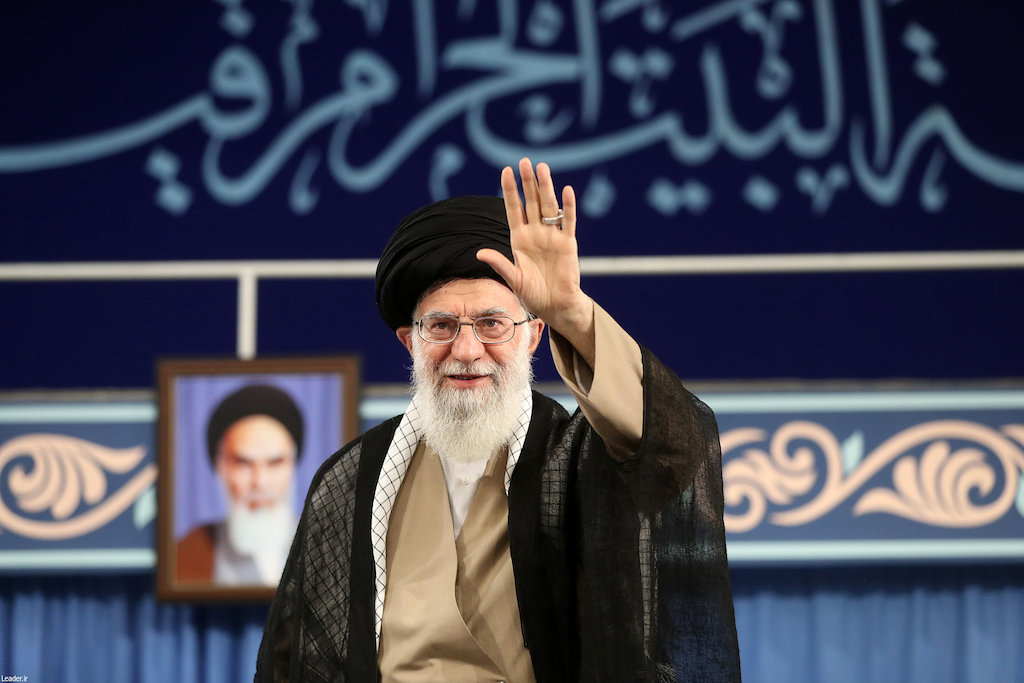
On 28 February 2026, the United States and Israel launched a comprehensive air campaign against Iran. Striking over 1,250 targets in the first 48 hours, they claim to have killed 49 members of the Iranian senior leadership, including the former Supreme Leader Ayatollah Ali Khamenei. In a post on Truth Social, President Trump described Khamenei’s death as “the single greatest chance for the Iranian People to take back their country”. Trump subsequently called on Iranians to “take over [their] government” and “unleash the prosperous and glorious future that is close within [their] reach”.
It is tempting to see the Ayatollah’s death as the decisive domino in a grand historical arc towards democratic rule. Yet, the history of foreign strikes against authoritarian regimes — especially in the Middle East — warns us against optimism. US troops captured Iraq’s Saddam Hussein, and rebels supported by NATO air attacks killed Libya’s Gaddafi. In neither case did the dictator’s demise deliver democracy. Rather, it catalysed further instability, civil conflict, and the reconstitution of authoritarianism.
Building democracy is an arduous, long-term project. At a minimum, it requires enforced peace between fragmented militants, functional bargains with the political elite, and stable, legitimate governing institutions. None of these can be delivered by air power.
Indeed, Iran is not even at the first step of the democracy-building process. Contemporary developments are destructive, not constructive. American and Israeli airstrikes have the stated aim of “annihilat[ing]” the Iranian capacity to make war at land or sea. The Iranian regime has retaliated with counterattacks against military, economic, and civilian targets across the Arabian Gulf. The conflict has expanded further in recent days, with Iran striking a British base in Cyprus and the US sinking an Iranian warship in the Indian Ocean. Speaking on Monday, President Trump stated that “from the beginning, we projected four to five weeks, but we have the capability to go far longer than that”.
The true test of democratic transition will be what happens once the bombs stop dropping — and that remains profoundly uncertain. On the one hand, Iran has an educated, politically conscious population instilled with revolutionary fervour against clerical rule. This democratising spirit was evidenced in February’s anti-regime protests, in which thousands were killed. This is the latest in a long history of civilian calls for democratic reform in Iran, including the 1979 Revolution against the Shah. Those protests, ironically, first swept the clerical regime to power.
On the other hand, these civilian revolutionaries face a complex, embedded network of repression. Already, a new three-member leadership council has reportedly been appointed to replace Khamenei, comprising President Masoud Pezeshkian, Judiciary Chief Gholam-Hossein Mohseni-Ejei and Ayatollah Alireza Arafi of the Guardian Council. This new leadership is seemingly committed to Iran’s religious-nationalist, anti-Western ideology. It is supported by a relatively decentralised military leadership scattered throughout the country, armed with damaged but still dangerous counterstrike capabilities.
The iron fist of this regime is its internal security apparatus: the Islamic Revolutionary Guard Corps (IRGC) and the Basij Militia. Their power lies in an extensive surveillance network, significant economic resources and influence, and brutal military capacity. These capabilities have been ruthlessly exercised against the civilian population, justified by a hardline worldview that frames lethal force against internal dissent as a religious duty.
Further complicating the situation are the deep ethnic and sectarian divides within Iran. Approximately half of Iran’s 93 million inhabitants constitute ethnic minorities, including a large Kurdish population in the north-western region. Any future development will likely need to accommodate their longstanding claims for recognition and autonomy.
Whatever happens next, it is highly unlikely to involve on-the-ground nation-building exercises by the US or Israel. Previous failures in Iraq and Afghanistan have solidified domestic political sentiment against such protracted overseas involvement. Moreover, neither Trump nor Netanyahu has ever shown much interest in democracy, either in practice or in rhetoric. Pete Hegseth, the United States Secretary of War, emphatically stated the point on Monday: “no stupid rules of engagement, no nation-building quagmire, no democracy-building exercise, no politically correct wars.”
In this context, I suggest there are three generalisable trajectories of possible future developments.
First, a democratic transition. In the short term, this would require fragmentation among the Iranian elite. It would also require the submission of the military and internal security forces to civilian leadership — or, at the very least, meaningful restraint. This pacification of internal resistance would create space for a transitional leadership authority to emerge. This might be someone like Reza Pahlavi, the son of the former Shah, who has presented himself as a possible candidate. With sufficient domestic legitimacy, this transitional authority could perform the crucial task of mediating between Iran’s diverse competing interests. They would also be crucial for keeping the country functioning as future terms of government are negotiated. In these conditions, the long and arduous process of democratic stabilisation through constitutional design, institutional reform and free and fair elections, could begin.
Alternatively, we might see prolonged resistance. This trajectory imagines an anti-West, anti-democratic regime (or regimes) maintaining control of Iran. This might reflect the current structure of hardline clerical rule under a Supreme Leader, a reformed authoritarian structure featuring former or new political elites, or a military coup in which the leader of the IRGC or the Army asserts control, backed by the threat of force. There is also the possibility for this resistance to fragment into civil war, with Iran’s various powerful internal actors fighting for control, as occurred in Libya following the fall of Gaddafi. In each variation of this model, democratic reform would be resisted, anti-Western policies maintained, and the Iranian population would continue to suffer.
Finally,amodel ofcollaboration.Here, we can imagine the US and Israel negotiating a deal with new powerholders, claiming strategic victory, and ignoring democratic goals. This might be a leader from the existing regime who is more compliant with foreign interests. This would mirror the American approach following the abduction of Venezuela’s President Maduro and the installation of his deputy, Delcy Rodriguez. In an interview with the New York Times, Trump described such an arrangement as the “perfect scenario”. Alternatively, the US and Israel might deal with a military general or a similar figure who does not closely identify with the existing leadership. Given the recent posturing for regime change, working with an outsider seems more likely if they want to credibly claim political victory. Regardless of who is lifted to the throne, it would be someone with whom they can negotiate a ‘deal’, likely including favourable trade and denuclearisation terms. This new leader would then be left to rule the country as they see fit, with the Iranian people’s wish for democratic self-rule disregarded.
All three of these trajectories are, of course, oversimplifications. It is possible, for example, that an initially compliant military figure could later turn hostile, or that an initially positive democratic trajectory could collapse into civil war. Moreover, it is unclear how the Iranian people would respond if the resistance or collaboration models were to play out. They are unlikely to accept another tyrant. However, given Iran’s internal authoritarian infrastructure, toppling such a leader will be difficult. This is especially true if foreign support for the popular movement is withdrawn or even tacitly offered to the new regime.
Ultimately, we don’t know what will happen. Factors beyond the public’s control will largely dictate the immediate future: the course of military escalation, political appetite and capacity for sustained military engagement, the resilience of military command structures, and the level of fragmentation among broader political and economic elites.
In the longer term, the idealised vision of representative government is possible. However, revolutionary spirit and a foreign-led air campaign are far from sufficient to get there. Bombings destroy, but democracy must be built. As the missiles continue to fly, whether it will be raised from the rubble remains radically uncertain.