

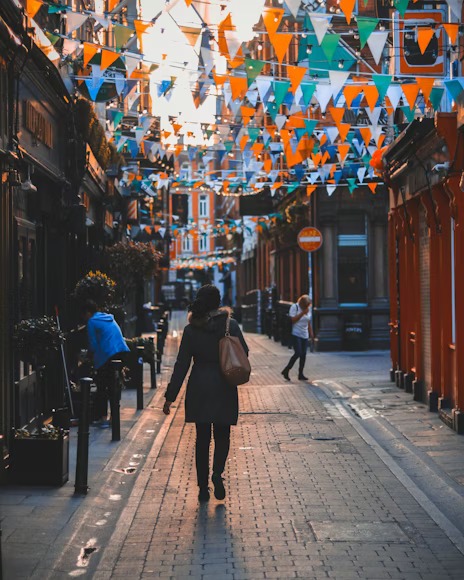
St Paddy’s Day has a way of making a weekday feel like a public holiday, even in places where March 17 is not marked on the calendar. In 2026, the date falls on a Tuesday, which tends to concentrate the headline moments into a narrower set of hours and push much of the heaviest social activity into the weekend on either side.
Across official programmes and venue listings, the pattern looks familiar: parades as the central image, multi-day festivals that turn one day into four or five, Irish music sessions that spread through pubs and community rooms, and landmark light-ups that travel on social media faster than any marching band. Dublin’s St Patrick’s Festival is scheduled from Saturday 14 March to Tuesday 17 March, an example of how organisers frame the week rather than a single afternoon.
St Paddy’s Day 2026 Activity Guide
| Activity | Setting | Examples | Typical scene | Crowd | Notes |
| Parade spectacle | City centre routes | Dublin parade, NYC Fifth Avenue parade | bands, dance, flags, TV | High | Road closures, long waits, movement tightens once packed |
| Festival nights | Ticketed venues, pop-up stages | Multi-day festival line-ups | comedy, gigs, arts events | High | Spread across several days, not only March 17 |
| Music sessions | Pubs, community halls | Local session circuits | fiddles, bodhrán, sing-alongs | Med | Session rules vary by venue, and sets can be informal |
| Heritage events | Museums, libraries, churches | Talks, exhibits, services | history, language, folklore | Low | Often, daytime, smaller rooms, quieter tone |
| Landmark greenings | Bridges, towers, waterfalls | Global Greening sites | photo moment, short windows | Med | Symbolic by design, crowding depends on site and weather |
| Casino tie-ins | Casino floors, online platforms | St Patrick’s themed promos | decor, shows, promos | Med |
Parades remain the core image, from Dublin to diaspora cities
The parade remains the most recognisable unit of St Patrick’s Day; a moving postcard that can be staged in different countries with the same basic vocabulary. In Dublin, the festival parade is listed for Tuesday, 17 March, inside a wider programme that runs from March 14 to March 17.
Parade culture is also shaped by diaspora history, and nowhere is that more obvious than in New York. The official parade organisation describes its event as the oldest and largest St. Patrick’s Day parade in the world, and traces its first march to March 17, 1762.
In other cities, the timing shifts according to local calendars. When March 17 lands midweek, some organisers keep the formal parade on the date, while surrounding events migrate to the nearest weekend, a split that can produce two peaks rather than one.
Festival programming stretches the calendar beyond a single afternoon
Large organisers increasingly frame St Patrick’s Day as a festival week, rather than a single procession. Dublin’s official festival advertises its 2026 schedule as an action-packed run across several days, with a public tone that leans into breadth and accessibility.
The festival’s own language captures that ambition, “action-packed programme with something for everyone to enjoy”, even as the actual programme mixes free street events with ticketed shows and limited-capacity venue nights. The same instinct to stretch a single date into a broader entertainment window is visible across other industries too — from streaming platforms dropping themed content drops to top rated casino sites running multi-day Irish-themed promotions that open well before the Tuesday and close well after it.
That structure has spread across other cities’ listings too; comedy and theatre nights, film screenings, daytime family events, and late sets in music venues that treat the holiday as part of a longer March entertainment season. A midweek date can make this feel more pronounced, weekend build-up, then a Tuesday centrepiece, then a slower taper.
Music sessions, food, and the venue economy around March 17
If the parade is the image, music is often the spine. Traditional sessions appear across listings from Irish pubs to community halls, and the sound tends to travel across generations, even when the crowd is not Irish by passport or surname.
In 2026, with March 17 falling on a Tuesday, many venues schedule multi-night runs rather than a single blowout. The same band might play a Sunday afternoon set, a Monday night session, and then a Tuesday headline slot, which changes the crowd profile, more locals early, more visitors closer to the day itself.
Food programming moves in parallel, sometimes as a quiet counterweight to the late-night imagery. Menus often slide between Irish dishes and diaspora staples that have become associated with the date in North America and elsewhere, a reminder that St Patrick’s Day culture is not fixed; it is negotiated each year in kitchens as much as on streets.
The commercial side of the holiday shows up most clearly in venue scheduling, green-themed branding, limited-time drinks lists, door policies, and additional security. For many operators, March is treated as a predictable spike, part tradition, part calendar management.
Heritage Events, and the religious origin that still shapes the day
The day’s origins are religious, and that thread still appears in the modern calendar even when the public focus lands elsewhere. Time has noted that St Patrick’s Day was established in 1631 by the Catholic Church as a feast day honouring St Patrick, before later evolving into broader cultural celebrations, particularly through diaspora communities.
Museums, libraries, and local cultural organisations often use the week for heritage programming, Irish migration history, language events, folklore talks, exhibitions, and community storytelling. These events rarely compete with parade spectacle; they operate in a different register, quieter, more reflective, and often easier to stage on a weekday.
Casinos and Themed Nights: Where luck gets a green costume
Casinos are not the first association with St Patrick’s Day, but casino floors and online gaming brands have treated March as a high-attention period. Promotions and themed nights often borrow Irish symbolism, shamrock motifs, green lighting, and music tie-ins without needing to claim the civic weight carried by parades and public ceremonies.
In the broader entertainment ecosystem, the casino angle sits alongside the same mechanisms that shape other nightlife, limited-time branding, ticketed shows, and the familiar push for footfall on the weekend nearest the date. It is another example of how the holiday’s meaning is distributed across settings, street, stage, venue, and screen.
Turning landmarks green, and the holiday as a global broadcast
Landmark lighting has become one of the clearest signs of St Patrick’s Day as a global media moment. Tourism Ireland frames its Global Greening programme as a worldwide invitation, and it has used the campaign to connect the holiday to a recognisable visual ritual.
In one of its recurring descriptions of the project, Tourism Ireland says, “Since 2010, Global Greenings have been a great way to invite everyone around the world to celebrate St Patrick’s Day”. The phrasing is simple, but it matches the campaign’s function, a shared colour cue across different time zones.
Recent Tourism Ireland materials have listed locations such as Niagara Falls, the Empire State Building, the Sky Tower in Auckland, and the Sacré-Cœur in Paris as examples of sites to be lit up in green. The roster shifts year to year, but the effect remains consistent, a short window that turns into an image cycle online.
Closing Thoughts…
St Paddy’s Day 2026 arrives on a Tuesday, and that simple calendar detail tends to reshape the way activity clusters. The parade route still carries the headline image, but the surrounding week takes on more weight, festivals stretch the timetable, music sessions multiply, and landmark light-ups translate the day into a global visual cue. The result is less a single event than a chain of scenes, some civic, some commercial, and many happening simultaneously.
Most importantly, Happy St Patricks Day to anyone that’s celebrating, no matter where you’re from or how you’re doing it!