

Sol White
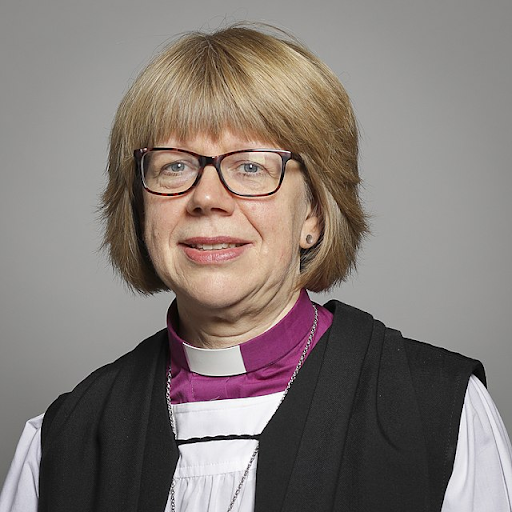
On 3 October 2025, the Church of England announced that Bishop Sarah Mullally had been nominated as the 106th Archbishop of Canterbury, making her the first woman ever selected for the position. Her formal Confirmation of Election occurred on 28 January 2026 at St Paul’s Cathedral in London, and her installation at Canterbury Cathedral is expected in March 2026. This appointment was widely celebrated within parts of the Communion as a historic moment, but it also crystallised long-standing tensions that have been developing within global Anglicanism for more than two decades.
The global Anglican family is not a single church in an institutional sense. It is a network of 42 autonomous provinces, each self-governing but historically bound together through communion with the Archbishop of Canterbury as primus inter pares or “first among equals”. Over the 21st Century, disagreements over human sexuality, the authority of scripture, and the limits of provincial autonomy have steadily strained that unity. Decisions made by Canterbury and allied churches, such as the consecration of an openly gay bishop in the United States in 2003, and later authorisations of same-sex blessings and marriages in parts of the Communion, have repeatedly tested the limits of shared authority and doctrinal coherence.
Long before Mullally’s appointment, Anglican leaders and theologians were debating whether the Communion could continue to hold together divergent theological positions under the same institutional umbrella. In 1998, the Lambeth Conference passed Resolution I.10, affirming traditional definitions of marriage while calling for pastoral care and respect for all people. In subsequent decades, this resolution became a focal point of disagreement, as some provinces moved toward greater inclusion of LGBTQ+ persons and rites. By the early 2020s, the Instruments of Communion, the Lambeth Conference, the Anglican Consultative Council, and the Primates’ Meeting were widely seen as symbolic forums rather than decisive centres of unity.
The Church of England’s 2023 introduction of Prayers of Love and Faith, which allowed blessings for same-sex couples while affirming marriage as a union between a man and a woman, was explicitly described at the time as a pastoral accommodation rather than a doctrinal change. Even so, many provinces, especially in Africa and Asia, saw it as evidence that Canterbury was unable or unwilling to maintain what they regard as historic Anglican doctrine.
Mullally’s Appointment as a Catalyst Moment
When Bishop Sarah Mullally’s selection was announced on 3 October 2025, the response made clear how far the Communion had drifted. Within the Church of England, and in many provinces outside Africa, her appointment was welcomed warmly. The Anglican Church of Australia’s Primate, the Most Reverend Geoffrey Smith, said he welcomed the news, and called on his community to pray for Bishop Sarah as she prepared to take on her new role, emphasising her commitment to encouraging the Church to “grow in confidence in the Gospel”.
Mullally herself spoke of service and unity. In her first public statement after her appointment, she said, “As I respond to the call of Christ to this new ministry, I do so in the same spirit of service to God and to others that has motivated me since I first came to faith as a teenager”. She emphasised her desire to encourage the Church to “speak of the love that we find in Jesus Christ and for it to shape our actions”.
Nevertheless, for a significant segment of the Communion, Mullally’s appointment was not seen as a unifying moment. Leaders of conservative Anglican networks responded rapidly with formal objections that went beyond personal disagreement, and appealed to structural questions about authority and doctrine.
Within days of the announcement, conservative voices within the Anglican Communion made their opposition clear. On 3 October 2025, the Global Anglican Future Conference (GAFCON) issued a communiqué under the headline “Canterbury Appointment Abandons Anglicans”, expressing sorrow at the decision and arguing that the Church of England had chosen a leader who would “further divide an already split Communion”. The statement asserted that Bishop Mullally had “promoted unbiblical and revisionist teachings regarding marriage and sexual morality”.
In a related statement on 17 October circulated by GAFCON-aligned sources, the Most Reverend Dr Laurent Mbanda, Chairman of GAFCON’s Primates’ Council, said that in electing a leader who had failed to guard what they regard as a historic faith, the Church of England had forfeited its ability to provide leadership to the global Communion. He stated that: “Since the newly appointed Archbishop of Canterbury has failed to guard the faith and is complicit in introducing practices and beliefs that violate both the plain and canonical sense of Scripture and the Church’s historic and consensual interpretation of it, she cannot provide leadership to the Anglican Communion”. This statement was widely reprinted by GAFCON affiliates.
The Church of Nigeria, one of the largest provinces within both the Global South Fellowship of Anglican Churches (GSFA) and GAFCON networks, described the appointment as “devastating” and said it “ignores the current situation”. Archbishop Henry of Nigeria emphasised that Mullally’s support for certain pastoral innovations “is incompatible with scripture” and questioned how she could “mend the already torn fabric of the Anglican Communion”.
None of these statements questioned Mullally’s character as such. Instead, their focus was entirely on doctrinal issues, and on the perceived inability of the Church of England to uphold what they regard as foundational teachings of the Communion.
Steps Taken Since the Appointment
In the weeks that followed the announcement, conservative provinces began to formalise their objections into organisational statements. On 16 October 2025, GAFCON published a document asserting its intention to “reorder the Anglican Communion” with the Bible as the sole foundation of Communion, rejecting the traditional Instruments of Communion, including the Archbishop of Canterbury, for having “failed to uphold the doctrine and discipline of the Anglican Communion.” The statement stressed, “We have not left the Anglican Communion; we are the Anglican Communion.”
Alongside this, plans were publicised for a major GAFCON assembly of bishops to be held in Abuja, Nigeria, from 3 to 6 March 2026, which organisers framed as a gathering to select a new primus inter pares, and to advance what they see as a reformed Anglican Communion. This development was widely reported as an attempt to establish a parallel centre of authority.
The Secretary General of the Anglican Communion, the Right Reverend Anthony Poggo, responded in a pastoral letter in mid-October 2025, urging prayer and reflection, and expressing the need to use all Instruments of Communion “to repair divisions” and to seek unity in truth. His tone was conciliatory, and focused on the long history of the Communion’s shared faith, even as he acknowledged the deep disagreements which are now apparent.
Most analysts now describe the Anglican Communion as institutionally intact but relationally fragmented. Rather than expecting a single formal schism event, commentators say the Communion is entering a period in which multiple networks co-exist with overlapping claims to Anglican identity and authority. The traditional Instruments of Communion continue to exist, but their capacity to maintain unity is sharply diminished, with selective participation and public repudiation now common.
Demographically, Anglicanism is growing in regions where leaders and laypeople more often reject liberalising trends on sexuality, while Western provinces continue to decline numerically and lose institutional influence. Many observers conclude that the leadership of the Anglican Communion is gradually shifting away from Canterbury toward networks like GSFA and GAFCON that represent significant proportions of the world’s practising Anglicans.
Whether the Communion eventually undergoes a formal legal schism remains uncertain. What is already clear is that the belief in Canterbury as a universally recognised centre of authority has been shaken, and that Anglicanism in 2026 looks increasingly like a constellation of interlinked but distinct bodies rather than a single global Church united around one leader.