
Nancy Gittus
In September 2025, youth protests erupted in Morocco, triggered by the deaths of eight women in a Hospital in Agadir. For many, this tragedy was a symbol of the rife inequality, corruption, and injustice that plague Moroccan society. The country’s healthcare sector is facing a severe crisis. In some particularly poorer areas, malfunctioning equipment, long waits, and prohibitively expensive treatments have become the norm. In 2025, Morocco placed 91st of 181 countries on the Corruption Perceptions Index. However, the protesters’ calls for increased spending on public services, and for the government to tackle corruption, were met with a repressive crackdown leading to mass arrests, and even deaths. One clear call came to symbolise the movement: “Stadiums are here, but where are the hospitals?”
Indeed, having recently hosted the Africa Cup of Nations (AFCON), which saw Morocco lose to Senegal in the final, the country has spent billions on its football infrastructure. For instance, the construction and renovations of just six stadiums for AFCON cost $1.4 billion (£1.02 Billion).
This is not the end of the country’s massive investment in football. In 2030, Morocco will be co-hosting the World Cup alongside its bid partners, Spain and Portugal. In this endeavour, the country plans to spend another $4.2 billion (£3.08 billion). But why – when faced with a crisis in inequality and corruption – might a country choose to invest so much in a game?
Hosting an event as massive as the World Cup does not just bring costs. It will also undoubtedly bring financial gains to the country. Although the tournament costs billions to host, the projected tourist revenues for 2030 are expected to exceed $30 billion (£22 billion). “The economic benefits of co-organizing the 2030 World Cup have been rigorously modeled, with an estimated impact of 1.7% additional growth and the creation of over 100,000 jobs annually,” announced Economy and Finance Minister Nadia Fettah. Although it is important to be careful of politicians inflating figures and exaggerating the benefits of such events, it nevertheless remains the case that the World Cup will hopefully alleviate Morocco’s current high unemployment rate of 13%.
Many industries integral to growing Morocco’s economy are set to benefit from the increased funding required to support a World Cup. Telecommunications will reap large rewards from the necessary upgrades to the country’s network infrastructure, which will enable Morocco to support high levels of data traffic during the global tournament. This means that the implementation of 5G technology will need to be rolled out at a much faster pace than previously planned.
There are also plans to undertake major construction projects. The country’s high speed rail will be extended in order to link the major central city of Marrakesh with Morocco’s largest city, Casablanca. A new airport will be built in Casablanca, and airports in Rabat and Fez will be expanded. Airport capacity will be increased from 38 million to 80 million by 2030. But of course, it cannot only be airports which are expanded if a country wants to increase its tourism sector. The planned 100,000 additional hotel beds will cater to football fans in the short run, but will help to permanently enlarge Morocco’s tourist capacity in the long run. These significant improvements in the country’s ability to welcome foreign visitors will allow Morocco’s tourism industry to expand, growing the country’s economy for generations to come.
Tourism is a growing sector for Morocco, as last year the country was visited by 17.4 million tourists, an increase of 20% from 2023. By 2030 it aims to attract 26 million tourists. Airlines are already increasing the number of flights to North African countries such as Morocco, Tunisia, and Egypt. Tui opened several new routes, for example from Newcastle to Agadir, and from Stansted to Enfidha. With anti-tourist protests in many major European hotspots, tourists are increasingly likely to holiday in North African countries. After all, they provide high-quality hotels and holiday services for a far cheaper sum.
This World Cup is also a chance for Morocco to enhance its soft power. As one of the world’s most watched sports events, the Cup provides Morocco with an excellent advertising opportunity. Morocco will aim to enhance its international image, strengthen its economy through construction projects, and “reinforce the monarchy’s political stature”. Moreover, Morocco will use the World Cup as a chance to diversify international alliances, as well as to affirm its sovereignty over disputed territories in the Western Sahara.
Indeed, this has already begun. Early last year, Morocco and Spain arranged an event called “Morocco and Spain, investing together for a sustainable and shared future”. There is also a possibility that an undersea rail tunnel will be constructed between the two countries, positioning Morocco as quite literally a bridge (or tunnel) between Europe and Africa. This is an interesting u-turn for Spain, a country which has often attempted to restrict the flow of North African immigrants into its territories.
On the North coast of Morocco lie two Spanish territories, Melilla and Ceuta. The passage between Morocco and these autonomous cities has long been used as a route for illegal immigration, but it is a deadly one. The most prominent example of the danger of this crossing is “the Melilla massacre”. In June 2022 at least 37 migrants were killed and hundreds injured by the actions of police forces preventing their escape from Morocco through the gate into Melilla. The Spanish Prime Minister at the time congratulated the Spanish and Moroccan forces for their efforts, stating the attempted crossing had been a “violent assault on Spanish Soil”. The fact that negotiations are underway as to the possibility of an undersea rail tunnel, clearly demonstrates a significant development in bilateral relations between the two nations.
With all eyes on Morocco, it has the chance to emphasise its identity as a “modern, tolerant and emerging country”. Morocco’s most ambitious aim, to construct the world’s largest stadium, which will be the Hassan II Grand Stadium in Casablanca, demonstrates this. It is clear that the World Cup has provided Morocco with an unparalleled chance to show itself as a logistically advanced continental leader, and an attractive prospect to foreign investment.
However, this event is not just engendering international admiration, alliances, and global investment. It is also intrinsically linked to a drive for national unity. Cultural showcases will give attendees an immersive experience of the country’s traditions and arts. A series of cultural exhibitions have been planned leading up to and during the event, which will showcase Moroccan arts, music, and cuisine, engendering national pride and valorising Moroccan culture to the world.
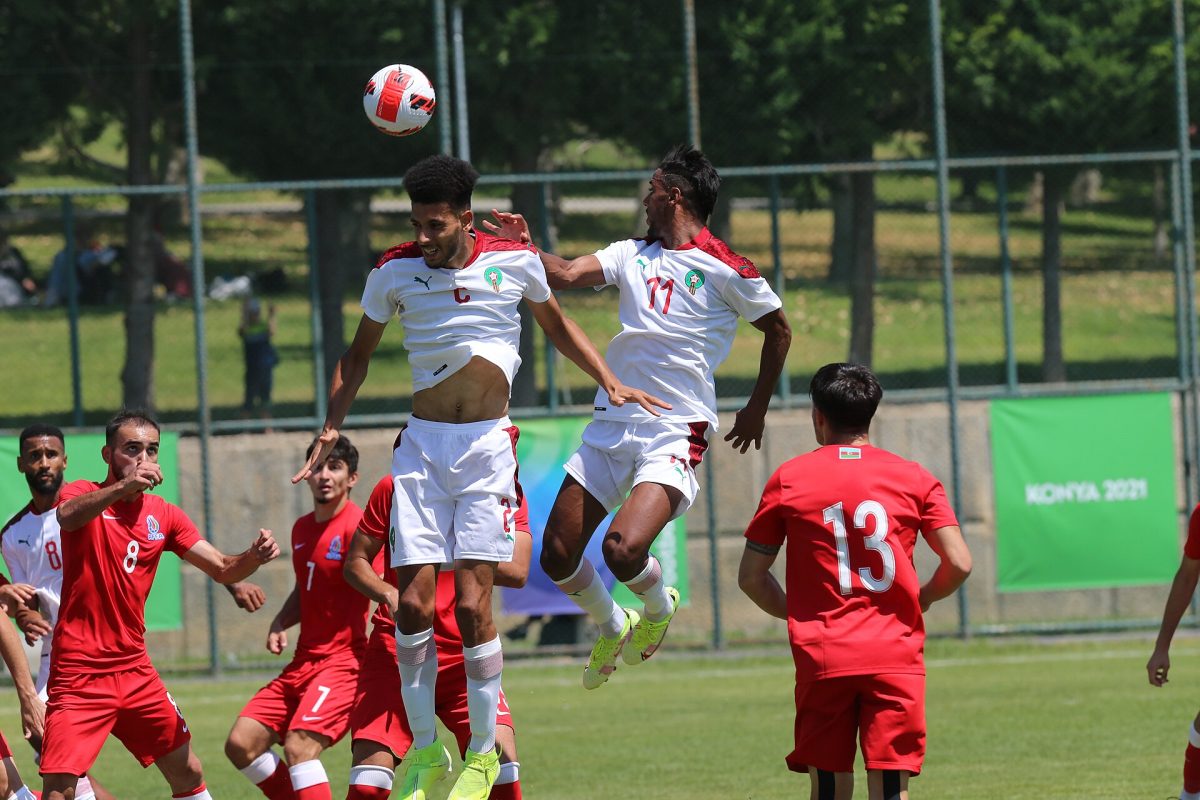
Although the recent protests have rather destabilised this ambition, it nevertheless remains the case that Morocco’s integral part at the heart of such a globally admired tournament will help to foster national pride and unity. As the Moroccan Institute for Policy Analysis argues, although politicians tend to overegg the financial benefits of hosting large events such as the World Cup, intangible benefits are often overlooked. Football is a massively popular sport in Morocco, and the success of players such as Achraf Hakimi and Yassine Bounou often act not only as symbols for national cohesion and pride, but also as idols for young people. Not only this, but the government’s investment in sports facilities will continue to benefit generations for decades to come. Encouraging young Moroccans to engage in sports, keep healthy, and pursue their ambitions will help to produce a more contented population driven to improve their quality of life and nation.
Whilst it is in no doubt that last year’s protests against the government’s massive investment in football is in no way unwarranted, it is also necessary to add that without the World Cup, the protests might not have achieved the international attention they did. By protesting such an internationally important event, the youth protests became the centre of global discussion leading institutions such as The London School of Economics, GIS, and the BBC. The very event that produced the protest catapulted it onto an international platform, and brought the problems highlighted under international scrutiny. For a Morocco which wishes to show the world its modern and developed identity, this international attention might engender more hasty action to remedy the issues raised by its youth.
It remains that, despite the prevalent issues of poverty, inequality, and corruption which this article does not intend to dismiss, Morocco’s status as a World Cup host will bring the country benefits in the long run. This tournament is Morocco’s chance to advertise itself to the world – to holidaymakers, investors, and global leaders alike – as a place with a promising future . And it is to be hoped that this event can bring together and inspire the country’s citizens through the spirit of teamwork within the “beautiful game”.