


This spring, an unusual, cultural experiment unfolded quietly at the Ashmolean Museum in Oxford.
Participants moved between museum galleries, archaeological study collections, tea sessions, and collective fan-painting workshops. Folding fans from Suzhou met reconstructed historical teawares inspired by archaeological research. Museum objects became starting points not only for interpretation, but also for conversation, sensory experience, and artistic response.
The project, titled Breeze & Brew, was developed by Dr Jenny Wang from Weave Yard and doctoral researcher Melody Li from the University of Oxford’s School of Archaeology. It received academic support from Professor Anke Hein and Dr Luciana da Costa Carvalho, as well as public engagement support from Beth McDougall through the University of Oxford’s Gardens, Libraries and Museums (GLAM) network, alongside support from the Ashmolean Museum Public Engagement with Research team.
At first glance, it appeared to be a programme about Chinese fans and tea culture. Yet as the sessions evolved, it gradually became something more complex: an exploration of how museum collections, academic research, and lived experiences might meaningfully intersect through shared cultural experience.

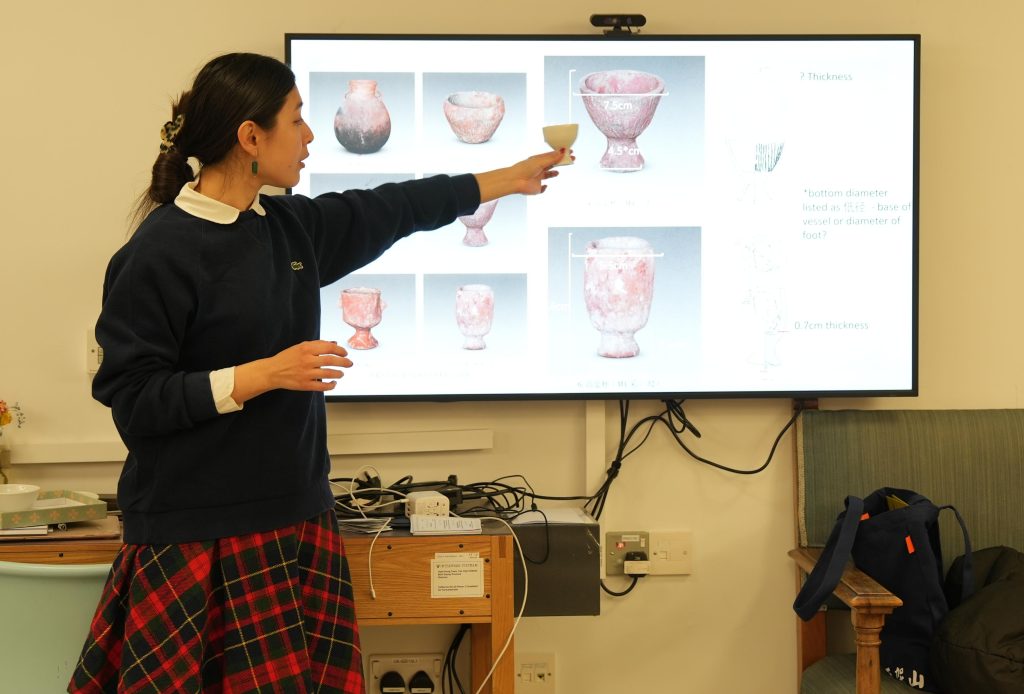
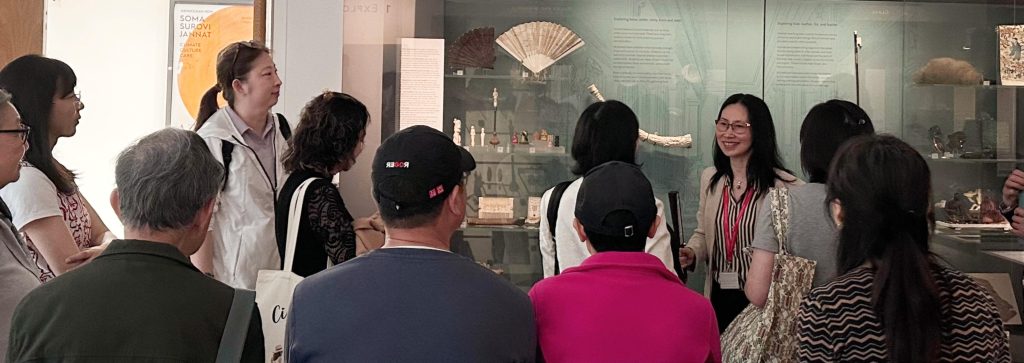
Rather than positioning visitors as passive audiences, the project invited participants to become active contributors to the interpretation of museum collections and cultural experience. Participants explored the Ashmolean’s Gallery collections and East Asian Study Room, handled objects connected to tea culture, reflected collectively on sensory experience through tea tasting, and created their own painted fans in response to what they encountered. Their reflections, stories, and artworks were later presented through a community-led digital exhibition.
The project was also shaped by the wider public engagement culture fostered across the University of Oxford’s GLAM network. At the same time, the Ashmolean Museum’s study spaces, learning facilities, and staff support helped create an environment in which research, collections, and community participation could meaningfully come together.
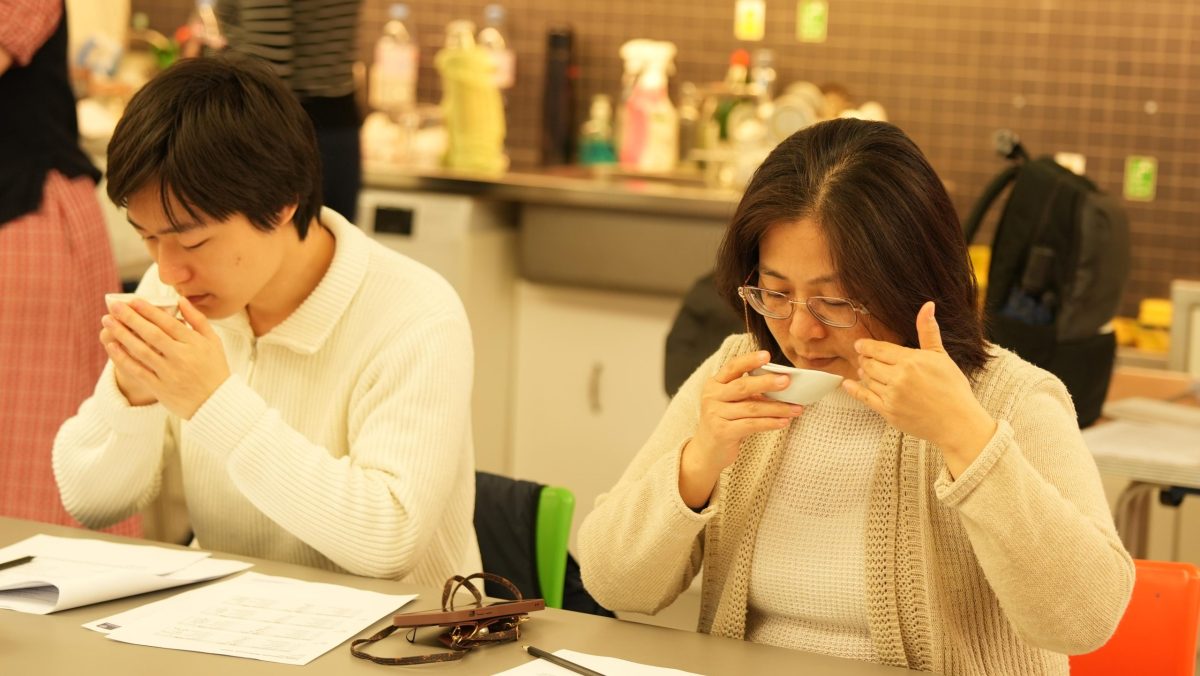
In one session, participants took part in a tea experiment using reconstructed historical cup forms developed through archaeological research. The experience prompted wide-ranging conversations around sensory perception, memory, embodiment, and cultural experience, as participants reflected collectively on the relationship between objects and everyday experiences.

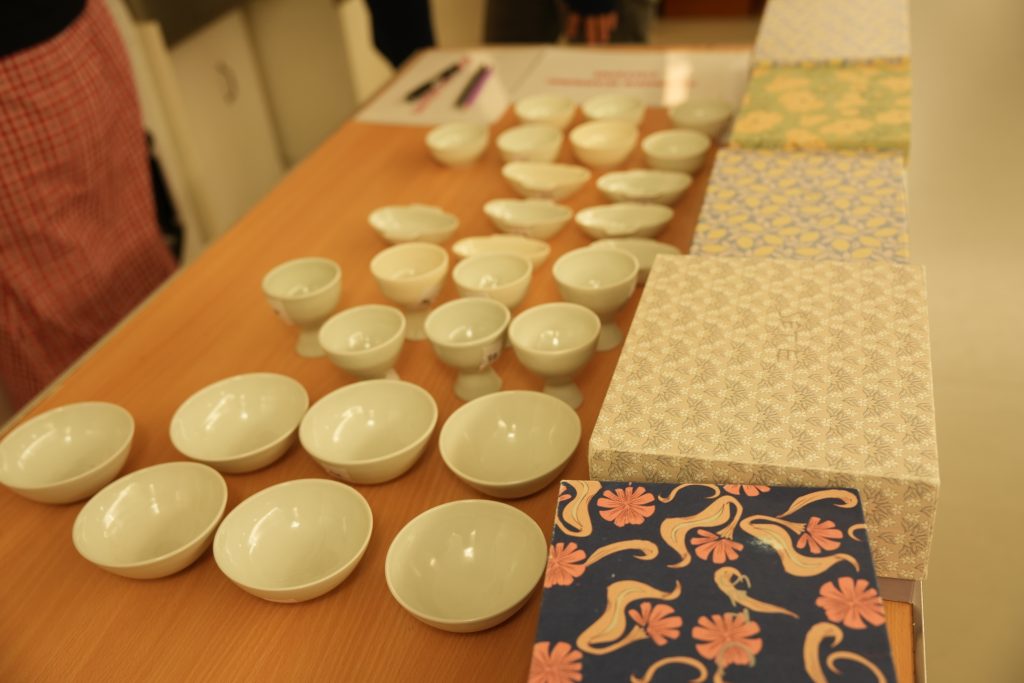
For doctoral researcher Melody Li, the discussions and reflections that emerged during the sessions also became a meaningful part of the wider research process, revealing how community participation can open up new ways of thinking about how people experience tea, perceive objects, and connect sensory experience with lived memory and cultural interpretation.
Another striking moment came when 78-year-old Suzhou artist, Ren Ye, travelled to Oxford carrying fan works by Qichang Zhou and Weiyi Lu, the leading masters of Suzhou fan painting. Alongside him, local artist Dr Shibin Zhang and British artist David Paskett—known for his long-term engagement with Chinese artistic traditions—joined participants in introducing fan painting and sketching on site. The interaction between artists, researchers, museum staff, and participants blurred traditional boundaries between expertise and audience and encouraged dialogue across different cultural traditions.
Over time, the project increasingly came to resemble what might be called a form of “community curation”: not simply interpreting culture for the public, but allowing meaning to emerge collectively through participation, making, and dialogue.
Importantly, the project did not end when the workshops finished.
The painted fans, written reflections, and participant responses have since been developed into an online exhibition curated by Weave Yard. Rather than treating public engagement as a temporary event, the digital exhibition attempts to extend the life of the project beyond the museum itself—creating a longer-term public archive shaped not only by institutions and researchers, but also by community voices and creative interpretation.
In many ways, this online exhibition has become one of the project’s most significant outcomes. It allows participants to continue reflecting on their experience, revisit one another’s work, and contribute to an evolving shared cultural space. It also suggests that digital platforms might support more participatory and community-led forms of cultural curation beyond conventional exhibition formats.
The online exhibition has also revealed how participants themselves began interpreting the project in highly personal, yet cross-cultural, ways. As participant Wang Yi reflected, “Whether it is the meditative spirit of Eastern tea culture or the sociable atmosphere of Western afternoon tea, both are ultimately forms of communication and human connection.”
As Weave Yard Director, Dr Jenny Wang, later reflected, the project gradually became not simply about presenting culture, but about creating situations in which people could experience and interpret culture together.
Yet, projects like this also reveal a broader challenge within today’s cultural landscape.
Cross-disciplinary public engagement projects often sit awkwardly between categories: not fully academic research, not fully museum programming, and not easily reduced to conventional arts funding models. They rely heavily on collaboration, volunteer contribution, and personal commitment, despite their potential to create meaningful forms of public cultural connection.
At a time when many museums and universities are rethinking how they engage wider audiences, projects like Breeze & Brew raise important questions. Can museums become spaces not only for preservation and display, but also for shared cultural creation? Can community participation become part of curatorial practice itself? And how might digital platforms extend the long-term public life of research and cultural experience beyond institutional walls?

At the same time, the project also highlights an ongoing challenge within the cultural and heritage sector: how independent organisations such as Weave Yard can receive the long-term support needed to sustain and develop this kind of community-based public cultural work.
Beyond this project, Weave Yard hopes to continue collaborating with museums, universities and researchers to explore new models of community-led cultural engagement, linking academic research, collections, and public participation.
Perhaps the project’s most meaningful achievement was not the fans or tea themselves, but the shared cultural space that emerged around them—one in which research, collections, artistic practice, and lived experience were able to speak to one another in new ways.
Breeze & Brew was supported by the University of Oxford’s PCER Fund for Public and Community Engagement with Research. The online exhibition can be viewed via Weave Yard: www.weaveyard.com